
You’ve parked the car and switched off the engine. You try to remove the key, but it won’t come out. You may turn it again, move the steering wheel, or pull harder, but the key stays trapped. A key stuck in the ignition can be caused by the gear selector, steering lock, ignition cylinder, key blade, electrical system, or another internal fault.
The safest response is to stop using force. Secure the vehicle, confirm it’s fully in Park, and contact an auto locksmith if the key still won’t release. Pulling harder may bend the key or snap it inside the ignition. That can turn an ignition key release problem into a broken-key extraction and ignition repair job.
What Should You Do First?
Don’t panic when your car key won’t come out of the ignition. A few calm checks can help you understand the situation without taking the ignition apart.
Keep the Vehicle Secure
Make sure the vehicle is fully stationary. Apply the parking brake and keep the car in a safe position. If you’re near moving traffic, focus on your safety before inspecting the key. Don’t leave the vehicle unattended with the key trapped inside.
Stop Pulling or Twisting
Don’t keep pulling the key. Heavy force can bend the blade, damage the ignition lock, or snap the key. Repeated twisting can also place more pressure on worn parts inside the cylinder. Leave the key in its current position when it feels firmly trapped.
Confirm the Engine Is Off
Look at the dashboard and listen to the engine. The ignition may still be in the Accessory or On position, even when the engine isn’t running. Some keys only release when the ignition reaches its correct Lock or Off position. Don’t force the key backwards if it won’t move normally.
Check the Gear Position
On many automatic vehicles, the ignition key can’t be removed unless the selector is recognised in Park. Official Kia owner guidance confirms that vehicles with an ignition key interlock may hold the key when the selector isn’t in the Park position. The exact system varies between vehicles.
Check that the dashboard shows P. Don’t repeatedly move the selector or push it with heavy force.
Read Any Dashboard Warning
Look for messages linked with:
- Shift to Park
- Steering lock
- Ignition fault
- Key detection
- Low vehicle voltage
- Gear selector fault
Record the exact message. It may help the locksmith identify the likely problem before arriving.
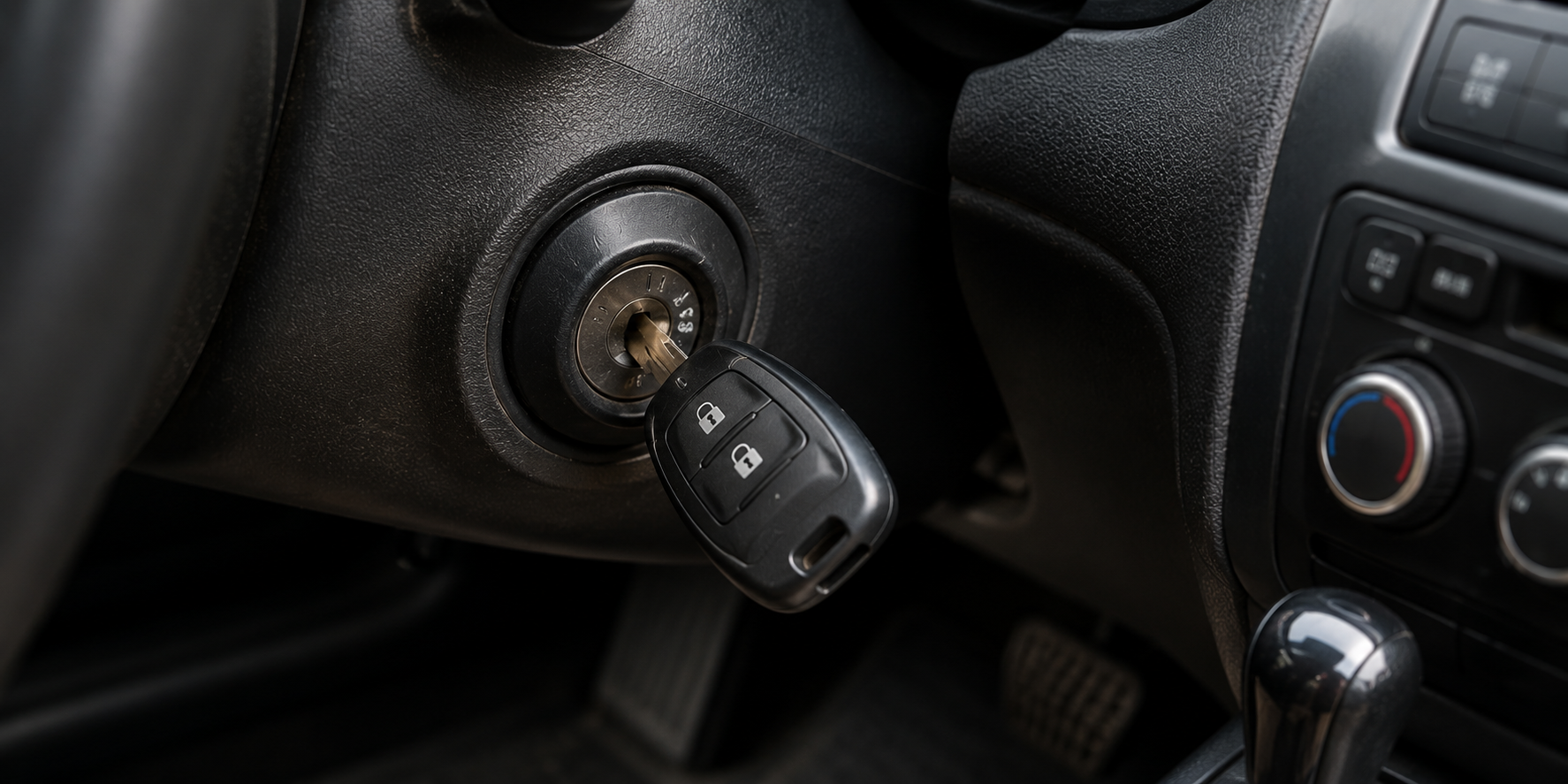
Why Is My Key Stuck in the Ignition?
There isn’t one cause that applies to every vehicle. The fault may involve the key, ignition, gearbox selector, steering lock, or electronic release system.
The Gear Selector Isn’t Recognised in Park
Your selector may appear to be in Park, but the vehicle may not recognise it correctly. Automatic vehicles can use an interlock system between the gearbox selector and ignition. The key may remain locked when the system believes the vehicle is still in another gear.
Possible causes include:
- A worn selector mechanism
- A faulty Park-position switch
- A damaged interlock cable
- Loose selector parts
- An electrical interlock fault
- The selector not sitting fully in Park
Repeatedly forcing the gear lever may make the problem worse.
The Steering Lock Is Under Pressure
The steering wheel can place pressure on the ignition system after parking. This is more common when the wheels are turned against a kerb or the steering wheel moves after the engine is switched off.
Some manufacturer manuals say that slight steering-wheel movement may help release normal steering-lock tension. The movement should be gentle and model-specific guidance should be checked first.
Don’t pull heavily on the wheel or force the ignition key.
The Ignition Hasn’t Returned Fully to Lock
The key may remain trapped when the ignition doesn’t reach its final Lock position. This may happen because of internal wear, steering pressure, a damaged key, or a fault inside the ignition barrel. The dashboard or radio may stay powered when the ignition remains in Accessory.
The Key Is Worn or Damaged
Car key blades wear over time. The cuts can become rounded, and the blade may become bent or cracked. A worn key may enter the ignition but fail to move smoothly through every position.
Watch for:
- A visibly bent blade
- Cracks near the key head
- Worn or rounded cuts
- A loose folding blade
- Rough movement when turning
- A key that only works at one angle
Don’t straighten a damaged key while it remains inside the ignition.
The Ignition Lock Cylinder Is Worn
The ignition lock cylinder contains small moving parts that match the key. These parts can wear, stick, or move out of position. A damaged cylinder may stop the key turning fully back to its release point. You may have noticed earlier warning signs, such as stiffness or uneven movement.
The Shift Interlock Has Developed a Fault
The shift interlock helps control when the selector, ignition, and key can move. When it fails, the vehicle may remain in Park while the key still doesn’t release. The key may also become stuck only on certain occasions. This problem needs proper diagnosis because the ignition itself may still be working.
An Electrical Issue Is Affecting the System
Some vehicles use electronic steering locks, selector sensors, and ignition release systems. Low voltage or an electrical fault may affect these systems on certain models. However, it isn’t a universal cause, and disconnecting the battery isn’t a safe general fix.
Manufacturer guidance shows that vehicle power and key detection affect several electronic locking systems. This suggests low voltage may contribute on some vehicles, but the exact fault must be diagnosed.
Dirt or Foreign Material Is Inside the Ignition
Dust, sticky residue, metal wear, or part of a damaged key may affect the cylinder. The key might feel rough or stop before reaching the release position. Don’t insert a wire, pin, blade, or screwdriver to clear the ignition. These objects can damage the internal parts or become trapped.
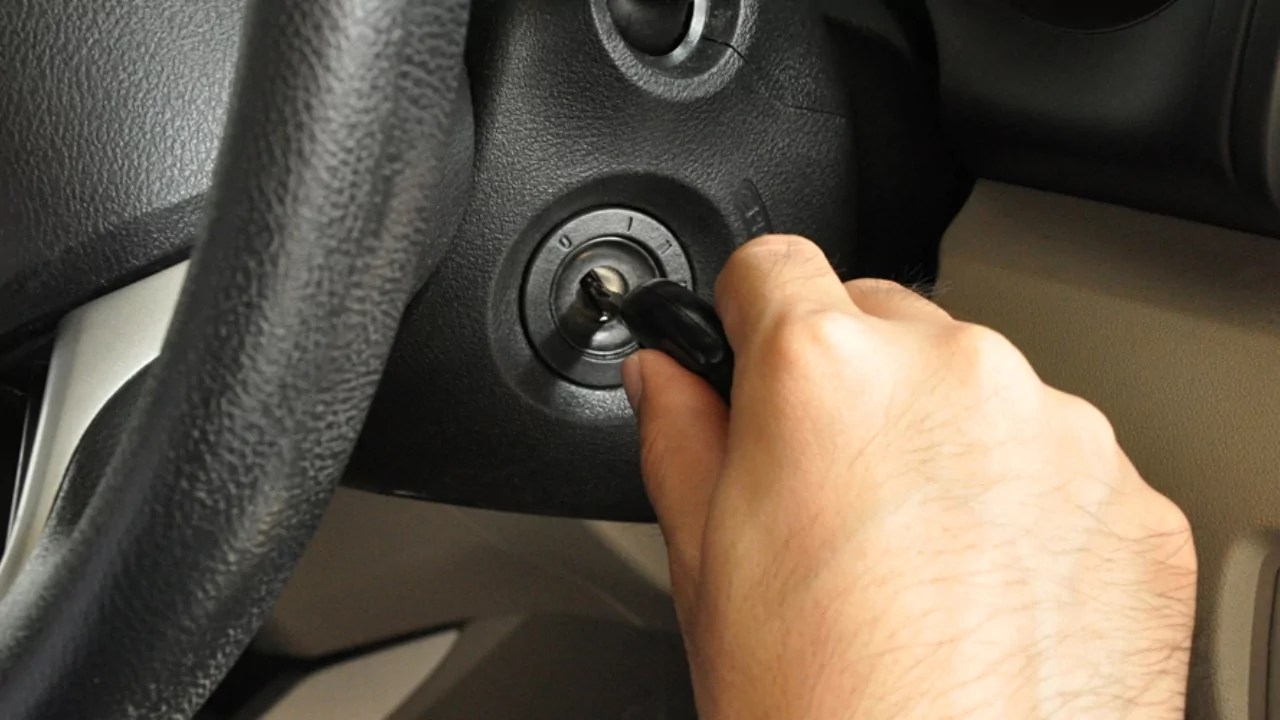
Key Stuck While the Car Is Off
Many drivers ask why the key is stuck when the car is already off. Turning off the engine doesn’t always mean the ignition has reached its full release position. The selector may not be recognised in Park, or the ignition may remain partly in Accessory.
You may notice:
- The radio remains on
- Dashboard lights stay active
- The steering wheel doesn’t lock
- The key turns part of the way
- The selector shows Park but feels loose
- The fault happens only sometimes
An intermittent fault shouldn’t be ignored. It can become a complete failure without much warning.
Safe Checks Before Calling for Help
These checks don’t involve dismantling or bypassing the vehicle. Stop immediately if the key, selector, or steering wheel feels firmly jammed.
Confirm the Car Is Fully Stationary
Make sure the vehicle has stopped completely. Apply the parking brake and keep your foot away from the accelerator. Don’t troubleshoot the ignition while the vehicle is moving.
Confirm Park Without Force
Check whether the selector and dashboard both show Park. You can place a normal, light hand on the selector to confirm it has reached its usual position. Don’t slam it between gears or use unusual force. If the selector feels loose or the dashboard doesn’t show Park, arrange professional help.
Check the Ignition Position
Look at the markings around the ignition. The key normally needs to return to its correct Lock or Off position before removal. Don’t force it beyond its normal travel.
Relieve Light Steering-Wheel Tension
Check the vehicle handbook before doing this. Some manufacturers advise light steering-wheel movement when normal steering-lock pressure prevents the ignition moving. Use only gentle pressure and stop when the wheel or key resists. This isn’t suitable when the key is bent, cracked, or partly broken.
Check the Vehicle Handbook
The owner’s manual may explain:
- Correct key removal
- Gear selector requirements
- Steering-lock warnings
- Dashboard messages
- Model-specific emergency advice
Follow information written for your exact make, model, and year.
What Should You Avoid?
Online videos may suggest quick fixes, but those methods can increase the damage.
Don’t Pull with Pliers
Pliers can crush or bend the exposed part of the key. They may also snap the blade inside the ignition, leaving less metal available for safe extraction.
Don’t Insert Screwdrivers or Wires
Metal tools can damage the cylinder and internal wafers. They may also scratch the steering column, break electrical parts, or become stuck inside the ignition.
Don’t Force the Gear Selector
Moving the selector hard between gears may damage the linkage or interlock. It can also create a vehicle movement risk when the parking brake isn’t secure.
Don’t Disconnect the Battery
Battery disconnection isn’t a general ignition-key solution. It may reset vehicle settings, create warning lights, affect security systems, or leave the original fault unchanged. Battery procedures also vary between manufacturers. Arrange testing when you suspect a low-voltage problem.
Don’t Use Hidden Override Controls
Some vehicles have model-specific service or emergency releases. Don’t search for hidden buttons and press them without the correct owner guidance. These controls may release a selector rather than repair the ignition fault. Using an override incorrectly may allow unexpected vehicle movement.
Don’t Spray General Lubricant Inside
WD-40 and other general sprays aren’t suitable for every ignition cylinder. The wrong product may attract dirt, affect electrical parts, or make professional inspection harder. Let a trained person inspect the ignition before adding anything.
How an Auto Locksmith Diagnoses the Problem
A professional doesn’t begin by pulling the key harder. The first goal is to find which part is holding it.
Ownership and Identity Checks
A responsible auto locksmith should confirm that you own or have permission to use the vehicle. You may be asked for photographic identification, vehicle documents, insurance details, or another form of proof.
Key and Ignition Inspection
The locksmith checks the blade, key head, ignition position, and cylinder. They’ll look for wear, bending, cracks, rough movement, and signs of earlier DIY attempts.
Gear Selector and Interlock Checks
The selector position and key-release system may need checking. This helps separate an ignition barrel fault from a Park switch, cable, selector, or interlock problem.
Electrical and Diagnostic Testing
Modern vehicles may store fault information. Diagnostic testing can help identify problems involving the steering lock, key detection, selector position, immobiliser, or ignition system.
Safe Key Removal
The removal method depends on the fault. The locksmith may release the key without replacing the ignition. More work may be needed when the key is bent, broken, or trapped inside damaged parts.
Final Function Testing
The key and vehicle should be tested after removal. Testing may include:
- Key insertion and removal
- Ignition movement
- Engine starting
- Steering-lock operation
- Selector recognition
- Remote key functions
- Spare key operation
The cause should be addressed before the vehicle returns to normal use.
Does the Ignition Need Repair?
A trapped key doesn’t always mean the whole ignition needs replacing. The right service depends on what caused the fault.
Key Removal Only
The ignition may remain usable when the key releases safely and no damage is found. The key itself may still need replacing if it’s worn or bent.
Key Blade Replacement
A damaged blade can be cut and replaced. Modern keys may also contain a transponder chip and remote electronics, so the full key should be tested afterwards.
Ignition Cylinder Repair
The cylinder may be repairable when internal parts are worn or sticking. A locksmith can explain whether repair is suitable after inspecting the ignition.
Ignition Barrel Replacement
Replacement may be needed when the barrel is badly worn, broken, or beyond safe repair. The new ignition may also need to work with the vehicle’s existing key and security system.
Shift Interlock Repair
When the ignition is working, the real fault may be linked with the gear selector. The affected selector, switch, cable, or electrical component may need attention.
Steering-Lock Diagnosis
A steering-lock fault can stop normal key or ignition movement. Car Keys 24 already provides ignition repair, broken-key extraction, and steering-lock services. Its ignition page says the service covers ignition lock repair, switch work, and broken-key removal.
Signs Your Ignition Is Failing
A key rarely becomes trapped without earlier warning signs. Arrange an inspection when:
- The key feels stiff
- The key needs wiggling
- The ignition works only at one angle
- The key sometimes won’t turn
- The steering lock doesn’t release normally
- The key is difficult to remove
- The dashboard stays powered
- The selector doesn’t show Park correctly
- The fault keeps returning
- The key blade looks worn
Early attention may prevent the key snapping or becoming completely trapped.
Can a Weak Car Battery Trap the Key?
It may contribute on some vehicles with electronic release systems. A weak vehicle battery can affect electronic locks, sensors, key detection, and control modules. However, many stuck-key faults are mechanical or linked with the gear selector.
Don’t assume that fitting or disconnecting a battery will solve the problem. Watch for other low-voltage signs, including:
- Slow engine cranking
- Dim dashboard lights
- Repeated electrical warnings
- Central locking problems
- Clicking when starting
- Several systems failing together
Professional testing can confirm whether voltage is involved.
How Much Does Ignition Key Removal Cost?
There isn’t one price for every vehicle. The cost can depend on:
- Vehicle make and model
- Vehicle year
- Key condition
- Ignition type
- Cause of the fault
- Gear selector involvement
- Steering-lock involvement
- Electrical testing
- Whether the key has snapped
- Whether parts need replacing
- Your location and booking time
Ask whether the quotation includes attendance, diagnosis, key removal, parts, labour, and testing. A very low quote may cover attendance only.
How Long Does the Service Take?
A simple release may take less time than a damaged ignition repair. The job can take longer when:
- The key is bent
- The blade has snapped
- The selector system has failed
- The ignition barrel needs repair
- Replacement parts are required
- Electrical diagnosis is needed
- Previous tools have caused damage
Avoid anyone promising an exact completion time without asking for vehicle details.
How to Prevent Another Stuck Key
Check your key and ignition before they fail completely. Replace a key when the blade is bent, cracked, loose, or heavily worn. Keep the key ring light because heavy items place extra strain around the ignition.
Don’t force an ignition that feels stiff. Have the vehicle checked when the selector doesn’t sit correctly in Park. Keep a working spare key and test it from time to time. A spare can also help show whether the fault is linked with the main key or ignition.
When Should You Contact an Emergency Auto Locksmith?
Contact a professional when:
- The key won’t release from the ignition
- The key is bent or cracked
- Part of the key has snapped
- The ignition won’t reach Lock
- The steering wheel is firmly locked
- The gear selector isn’t recognised in Park
- A warning light remains on
- The dashboard stays powered
- You’re stranded away from home
- You don’t have a spare key
- The fault keeps returning
- Someone has already inserted tools or lubricant
Car Keys 24 provides mobile support for ignition faults, trapped keys, broken-key extraction, replacement keys, and related vehicle lock problems across its listed service areas. Call 07731 505 060 with your registration, location, vehicle details, and a description of the problem.
Frequently Asked Questions
Why is my key stuck in the ignition?
Common causes include the selector not being recognised in Park, steering-lock pressure, key wear, ignition cylinder damage, or an interlock fault.
What should I do when my key is stuck?
Secure the vehicle, apply the parking brake, confirm Park, and stop using force. Contact an auto locksmith when the key remains trapped.
Why won’t my key come out when the car is off?
The ignition may still be in Accessory, or the vehicle may not recognise Park. An internal ignition or interlock fault may also prevent release.
Can the steering wheel lock trap my key?
Steering-lock pressure can affect key movement on some vehicles. Only use light movement allowed by your vehicle handbook and never force the key.
Can a dead car battery cause a stuck key?
Low voltage may affect electronic release systems on some models. It isn’t a universal cause, so the vehicle should be tested before assuming the battery is responsible.
Should I pull the key with pliers?
No. Pliers may bend or snap the key and damage the ignition face.
Should I spray WD-40 into the ignition?
Don’t use general lubricant before the ignition is inspected. The wrong product may attract dirt or affect nearby electrical parts.
Can an auto locksmith remove a stuck ignition key?
Yes, many auto locksmiths diagnose stuck keys and ignition faults. The method depends on the vehicle and cause.
Will my ignition need replacing?
Not always. The problem may involve the key, selector, steering lock, or a repairable cylinder. Inspection is needed before replacement is recommended.
Can I drive after the key is released?
Only drive after the ignition, selector, steering lock, and key work normally. A recurring fault may leave you stranded again.
What if the key snaps inside the ignition?
Stop immediately and don’t insert tools. A locksmith can inspect the fragment and use specialist equipment for broken-key extraction.
Do I need proof of ownership?
A responsible locksmith should ask for identification and proof that you own or have permission to use the vehicle.


