
A car key can stop working at the worst possible moment. You may be leaving for work, collecting your children, or standing beside your car in the rain. You press the unlock button, but nothing happens.
A weak car key battery is one possible cause. However, damaged buttons, worn battery contacts, water damage, programming faults, and internal key problems can cause similar symptoms. So, how do you change the battery of a car key safely?
The correct method depends on the make, model, year, and key design. Some car keys have removable coin cell batteries, while others use sealed or rechargeable units. Ford, for example, confirms that its replacement process changes between flip keys, Intelligent Access keys, and sealed rechargeable keys.
Before opening the key, check the vehicle handbook or ask an auto locksmith to identify the correct battery. This protects the key casing, circuit board, transponder chip, and internal contacts.
How Do You Know the Battery Is Low?
A dead car key battery doesn’t always fail without warning. You’ll often notice small changes first. Acting early can stop the key from failing when you’re away from home.
The Remote Range Becomes Shorter
A healthy remote should work from its normal operating distance. When the battery becomes weak, you may need to stand much closer to the vehicle. The key might work beside the driver’s door but fail from several metres away. A shorter range is one of the most common signs of a low key fob battery.
The Buttons Work Intermittently
You may press the lock button once and get no response. After several attempts, the car may finally lock or unlock. This can suggest a weak battery, but worn buttons or loose internal contacts can cause the same problem. Don’t keep squeezing the buttons harder. Extra pressure may damage the rubber pad or small switches beneath it.
A Dashboard Warning Appears
Some vehicles display a low key battery warning. The wording differs between manufacturers. You might see a message about a weak remote battery, low key battery, or key not detected. Check the owner’s manual when a warning appears. Toyota and other manufacturers provide model-specific owner manuals because key systems and warning messages vary between vehicles.
Keyless Entry Stops Responding
A low key fob battery may affect passive or keyless entry. The vehicle may stop unlocking when you touch the handle. It may also struggle to detect the key inside the car. However, signal interference, vehicle receiver faults, and key programming problems can create similar symptoms.
The Spare Key Still Works
Try the spare key when one is available. If the spare works normally, the main key probably has a local fault. That fault might involve its battery, buttons, casing, circuit board, or programming. When both keys fail, the problem may be linked to the vehicle instead.
Is the Battery Really the Problem?
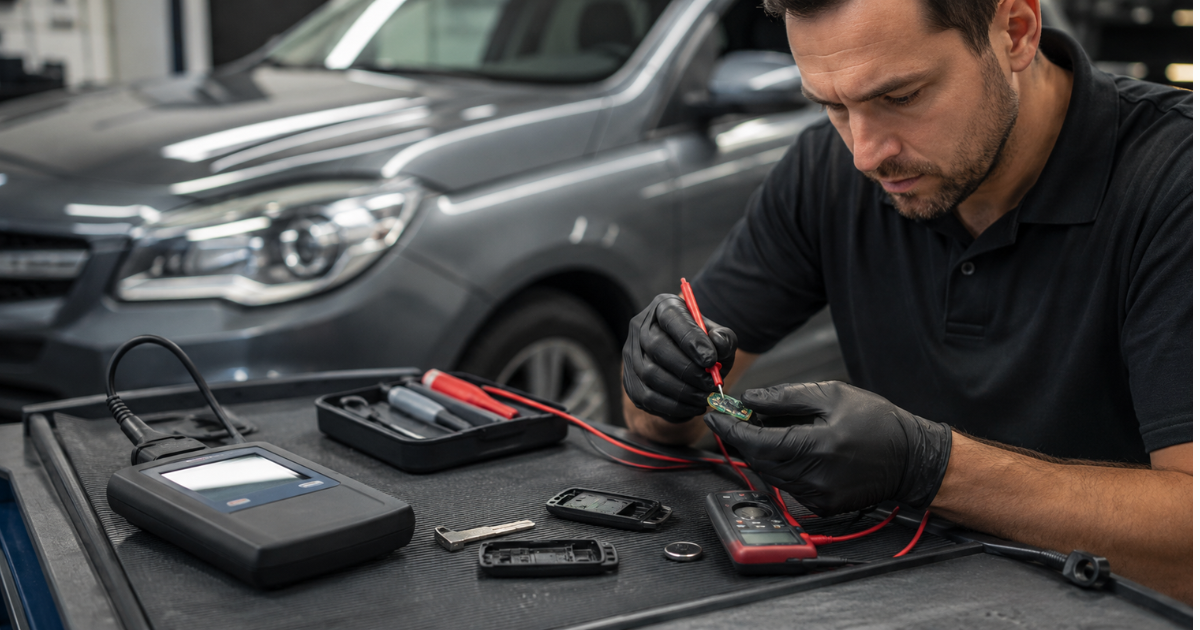
Car key battery replacement won’t solve every key fault. A proper diagnosis can save you from buying batteries repeatedly without fixing the real problem.
The Doors Don’t Unlock
A weak car remote battery may stop the lock and unlock buttons working. However, the same problem can come from:
- Worn or collapsed buttons
- Damaged battery terminals
- Water inside the key
- A cracked circuit board
- Lost synchronisation
- Radio signal interference
- A vehicle receiver fault
The key should be inspected when a fresh battery doesn’t restore normal operation.
The Engine Doesn’t Start
A key fob battery and a vehicle immobiliser don’t always work in the same way. Many keys contain a separate transponder chip that allows the engine to start. The remote battery may control locking functions, while the transponder deals with vehicle security.
This means a key may start the engine but fail to unlock the doors remotely. It may also unlock the doors while an immobiliser or programming problem stops the engine starting. Don’t assume every starting fault needs a new coin cell battery.
The Buttons Feel Worn
Press each button gently. A button that feels loose, flat, stuck, or different from the others may have internal damage. Installing another battery won’t repair a broken button switch. A car key repair may be more suitable than battery replacement.
The Key Has Water Damage
Car keys contain sensitive electronic parts. Rain, washing machines, spilled drinks, and high moisture can damage the battery contacts or circuit board. Corrosion may continue after the outside of the key looks dry. Don’t keep testing a wet or damaged key. Arrange an inspection before further damage develops.
What Battery Does My Car Key Need?
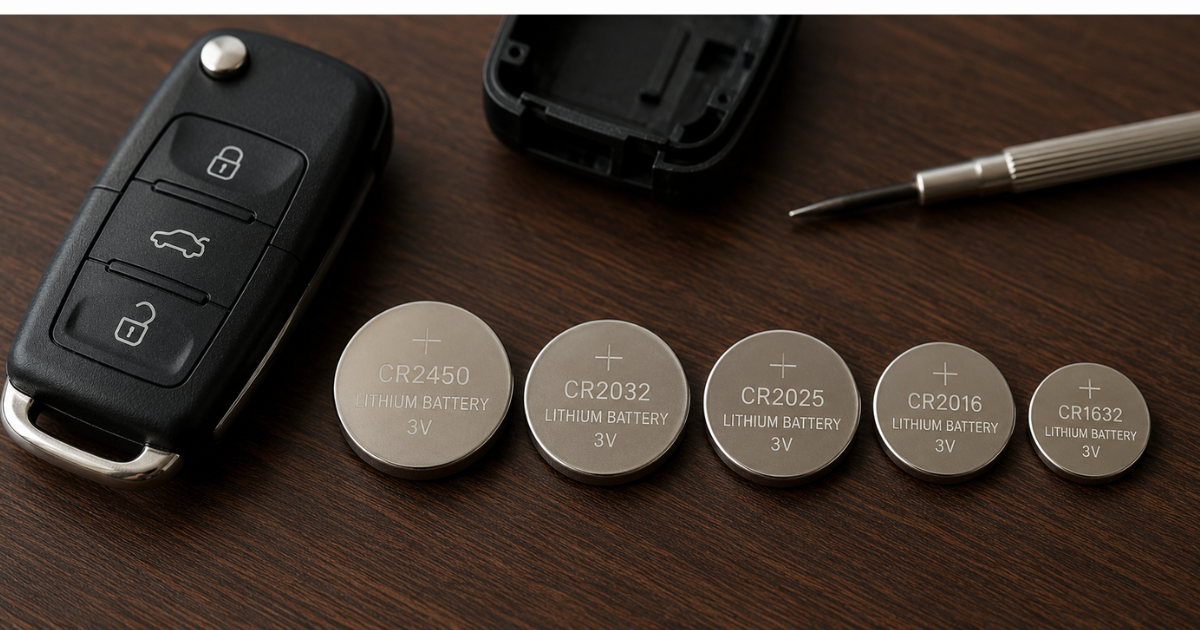
There isn’t one universal car key battery. Many keys use small lithium coin cells, but the exact code must match the key manufacturer’s specification.
Common Coin Cell Batteries
Common car remote battery types include:
- CR2032
- CR2025
- CR1632
- CR2016
- CR2450
These batteries can look similar, but they have different sizes and capacities. Energizer lists CR1632, CR2025, CR2032, and several other lithium coin cell designs as separate products with different specifications. A CR2032 is common in keyless entry devices, but that doesn’t mean it fits every car key.
Why Battery Codes Matter
The numbers on a coin cell aren’t just product names. They help identify the battery’s physical design. A battery with the wrong thickness may feel as though it fits, but it may not sit correctly against the contacts.
A loose battery can cause intermittent operation. A battery that’s too thick may place pressure on the casing or circuit board. Always use the exact battery code specified for your key.
Check the Vehicle Manual
Your owner’s manual is the safest starting point. Look under sections such as:
- Keys
- Remote control
- Keyless entry
- Battery replacement
- Passive key
- Smart key
You can also check the code printed on the existing battery, but opening an unfamiliar casing still carries a risk.
Don’t Guess the Battery Size
Avoid choosing a battery based only on its shape. Two coin cell batteries may have the same width but different thicknesses. They may also have different performance limits. An auto locksmith can identify the key and fit the correct car remote battery without guessing.
Can Every Car Key Battery Be Changed?
Many remote batteries can be replaced, but not every key uses the same design.
Standard Remote Keys
Standard remote keys usually combine a blade, buttons, battery, and circuit board. The casing may be clipped or screwed together. Opening it incorrectly can damage the plastic edge or internal clips.
Folding Car Keys
Folding keys have a blade that moves into the casing. Their springs, hinges, buttons, and circuit boards sit close together. Forcing the cover may disturb the folding mechanism or cause the blade section to become loose.
Smart and Proximity Keys
Smart keys communicate with the vehicle when they’re nearby. These keys may control passive entry, push-button starting, remote locking, and other vehicle features. They can be more expensive to replace when their casing or circuit board becomes damaged.
Sealed Rechargeable Keys
Some keys don’t use a normal replaceable coin cell. Ford notes that certain key types have sealed rechargeable units, while its other key designs use different opening and battery replacement processes. Trying to prise open a sealed key can cause permanent damage.
How Professionals Replace Key Fob Batteries
Professional car key battery replacement involves more than putting a new battery inside. The key should also be inspected and tested.
Identifying the Correct Key Type
The locksmith first identifies the vehicle and key. The vehicle registration, make, model, year, and key design can help confirm the correct battery and casing type. This avoids opening the wrong section or fitting an unsuitable battery.
Opening the Casing Safely
A specialist checks how the casing is secured. Some keys use hidden clips, small screws, sliding covers, or removable emergency blades. The opening point and pressure needed differ between keys. The aim is to access the battery without cracking the shell or damaging its seal.
Inspecting the Battery Contacts
The internal contacts should sit firmly against the battery. Bent, dirty, loose, or corroded contacts may prevent power reaching the circuit board. In that case, a battery change alone may provide only a temporary result. The locksmith can inspect the contacts before fitting another battery.
Installing the Correct Battery
The replacement battery must match the required code and position. Battery direction matters because the positive and negative sides must meet the correct contacts. The battery should also sit flat without forcing the casing.
Testing Every Key Function
The key should be tested after the battery change. This may include:
- Locking the doors
- Unlocking the doors
- Opening the boot
- Passive entry
- Key detection
- Starting the vehicle
- Emergency blade operation
Testing each function helps confirm whether the battery was the only fault.
Why Avoid Opening an Unfamiliar Fob?
Some car key cases are easy to damage. A small mistake may turn an inexpensive battery issue into a full key repair or replacement.
Broken Plastic Clips
Tiny clips hold many key cases together. They can snap when the wrong opening point is used. The casing may then remain loose or separate when carried.
Damaged Circuit Boards
The electronic board sits close to the casing. A screwdriver or metal tool can scratch the board, damage a component, or break a button switch.
Lost Transponder Chips
Some keys contain a small separate transponder chip. It may fall from the casing when the key is opened. Losing it can stop the car starting, even when the remote buttons still work.
Poor Water Sealing
A damaged or poorly closed case may allow moisture inside. The key may work at first but fail later as corrosion develops.
Why Is the Key Still Not Working?
A new battery doesn’t guarantee that the key will start working. Several other faults may be present.
The Wrong Battery Was Fitted
A similar-looking battery may not provide the correct fit. Check the full code rather than only the voltage or width.
The Battery Has Poor Contact
A battery can sit loosely against worn or bent terminals. The key may work when squeezed or held at an angle. This points towards a contact or casing problem rather than normal battery failure.
The Buttons Are Damaged
Buttons wear through regular use. The outer rubber may look normal while the internal switch has failed. Car key repair may restore the buttons without replacing the full key.
The Circuit Board Has Failed
A cracked or corroded circuit board can stop the remote signal. This may follow water damage, impact damage, repeated drops, or casing failure.
The Key Needs Synchronisation
Some vehicle and key combinations may need a model-specific synchronisation process after power has been lost. Don’t follow random online reset sequences. The wrong process may not suit your vehicle and could create further confusion. Check the owner’s manual or arrange professional testing.
The Vehicle Has a Fault
Sometimes the car, rather than the key, causes the problem. Possible causes include:
- A weak vehicle battery
- A faulty receiver
- An aerial fault
- Central locking trouble
- An immobiliser problem
- Signal interference
Testing the spare key can help separate a key fault from a vehicle fault.
Does a New Battery Need Programming?
A routine battery replacement doesn’t always require full key programming. However, some keys may need synchronisation, and an existing programming fault can become more obvious when the battery fails.
The correct answer depends on the vehicle and key system. Check the manufacturer’s manual rather than using one reset method for every car. Professional testing can show whether the key is transmitting and communicating with the vehicle.
When Does the Whole Key Need Replacing?
A complete key replacement may be needed when:
- The circuit board is badly damaged
- The casing can’t hold the battery securely
- The transponder chip has failed
- The key has serious water damage
- Several buttons have stopped working
- The remote signal can’t be restored
- The blade and casing are both heavily worn
- Previous repairs have failed
Replacement isn’t always the first option. Car Keys 24 provides mobile car key repairs, replacement, cutting, programming, unlocking, and related vehicle key services. The key can be inspected before a full replacement is recommended.
How Much Does Car Key Battery Replacement Cost?
The price depends on the key and the problem. A standard battery change may cost less than repairing damaged contacts, buttons, or casing. Smart keys and sealed units may also need more detailed work.
The cost can depend on:
- The vehicle make and model
- The key type
- The battery required
- The condition of the casing
- Internal contact damage
- Water or impact damage
- Programming needs
- Your location
A quote should explain whether you need a battery, repair, or complete replacement.
How to Protect Your Car Key
Small habits can reduce sudden key problems. Keep the key dry and avoid placing it near drinks. Don’t throw it into bags with heavy or sharp objects. Try not to press the buttons when the key is inside a pocket or bag. Repeated accidental presses can increase wear.
Use a spare key occasionally and check that it still works. Don’t wait until the main key fails before testing it. Have worn buttons, loose casings, and weak signals checked early.
Coin Cell Battery Safety
Car key batteries are small, but they must be handled carefully. Lithium coin cells should be kept away from children and pets. Battery manufacturers warn that swallowing one can cause severe internal injury very quickly. Used batteries should be removed from reach and disposed of safely. Don’t crush, recharge, burn, or take apart a coin cell battery.
When Should You Contact an Auto Locksmith?
Arrange professional help when:
- You can’t identify the correct battery
- The casing has no clear opening point
- The key is sealed
- The case is cracked or loose
- The key has water damage
- The buttons feel worn
- A new battery hasn’t fixed the fault
- The car can’t detect the key
- The vehicle won’t start
- Your spare key also fails
- You need key programming or replacement
Car Keys 24 offers mobile support across its listed service areas, including Dunstable, Luton, Bedford, Milton Keynes, Northampton, Watford, Hemel Hempstead, and St Albans. Availability can depend on your location and the work required.
Call 07731 505 060 and share your vehicle registration, location, and key problem.
Frequently Asked Questions
How do I know when my car key battery needs replacing?
Common signs include reduced range, repeated button presses, intermittent operation, keyless entry problems, and a low key battery warning.
What battery does my car key need?
Check the vehicle owner’s manual or the battery code specified for your exact key. CR2032 is common, but it isn’t suitable for every fob.
Can I use a CR2032 instead of a CR2025?
Don’t substitute battery codes without manufacturer approval. The batteries have different dimensions and may not sit correctly against the contacts.
Why does my key fob work only near the car?
A weak battery is one possible cause. Signal interference, damaged contacts, circuit faults, or vehicle receiver problems may also reduce its range.
Will changing the battery erase the key programming?
A normal battery change may not erase programming, but some keys can need model-specific synchronisation. Check your vehicle manual for the correct guidance.
Why won’t my key work after a new battery?
The battery may be incorrect, poorly seated, or unable to contact damaged terminals. The buttons, circuit board, programming, or vehicle may also have a fault.
Can a low key battery stop the engine starting?
That depends on the vehicle and key design. Some keys use a separate transponder for starting, while smart systems may rely more heavily on key detection.
Can an auto locksmith replace a car key battery?
Yes. An auto locksmith can identify the battery, open the casing safely, inspect the internal parts, install the battery, and test the key.
Does the complete key need replacing?
Not always. Battery, button, casing, and contact faults may be repairable. A full replacement is more likely when the electronics or transponder have failed.
Is a coin cell battery dangerous?
It can be extremely dangerous when swallowed. Keep new and used batteries away from children and dispose of them safely.


