
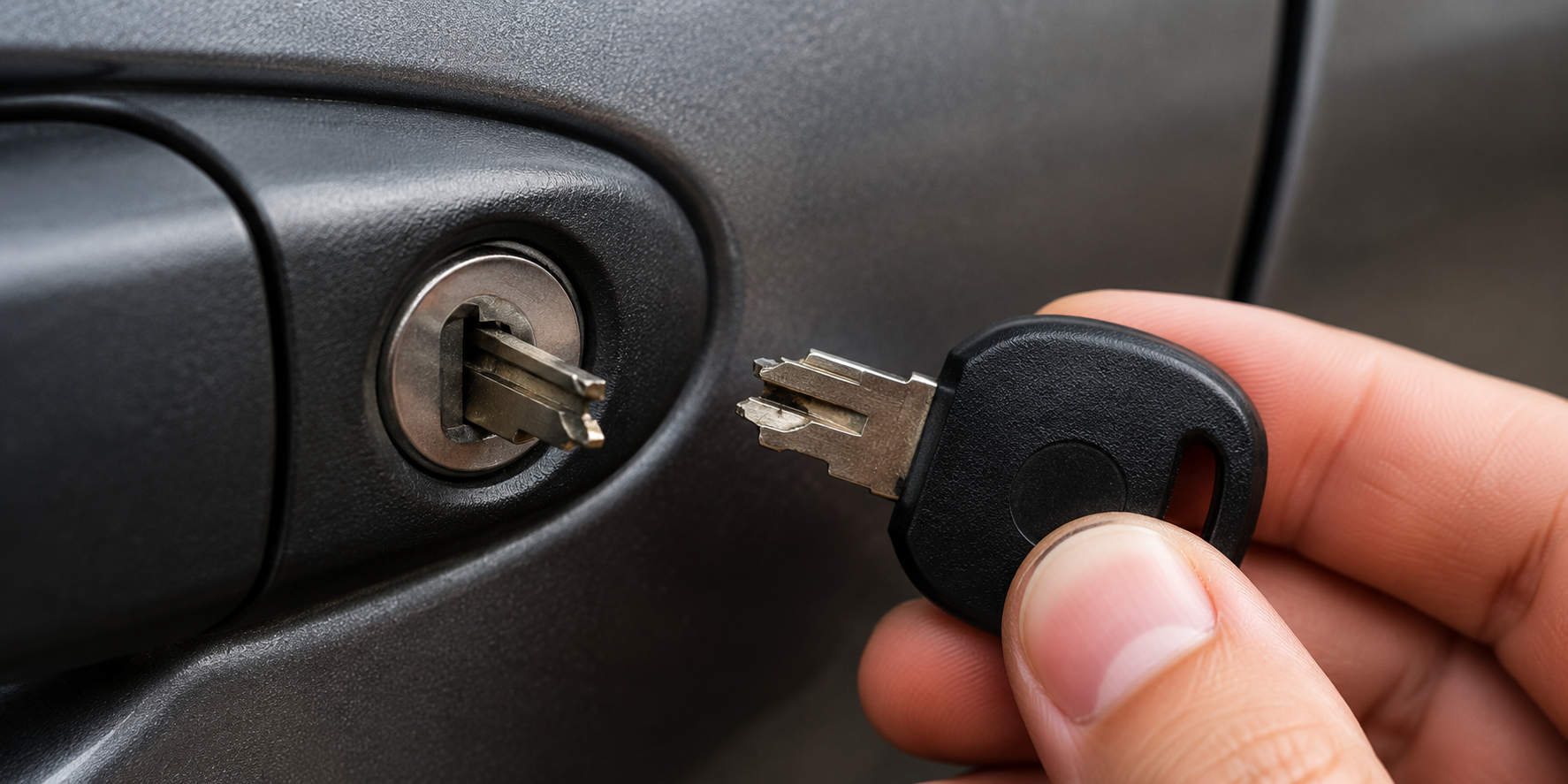
Hearing your key snap inside a lock can make your heart sink. You may be outside your car, running late, or unable to start the engine. Part of the key may still be in your hand, while the remaining piece is trapped inside the car door or ignition.
At this point, it’s natural to search for how to get a broken key out of a lock. However, pulling, twisting, or inserting household tools may push the fragment deeper and damage the lock. The safest first step is to stop using the lock. Keep the broken part of the key, secure the vehicle, and contact a professional auto locksmith.
What Should You Do First?
A broken key stuck in a lock needs careful handling. What you do next may affect whether the lock can be saved.
Stop Turning the Key
Don’t keep twisting the remaining part of the key. More pressure may move the fragment deeper into the keyway. It may also damage the small parts inside the lock or ignition. If the key snapped while partly turned, leave the lock in its current position. Don’t try to reset it with another object.
Keep Every Broken Piece
Keep the part of the key that came out. A locksmith can inspect the blade for wear, cracks, bends, and other damage. The remaining piece may also help identify the correct replacement blade. Place it somewhere safe rather than carrying it loose in your pocket.
Don’t Insert Another Key
You may be tempted to push a spare key into the same lock. This can press the broken fragment farther inside. It may also damage the spare key or jam the lock completely. Use a remote button to secure the vehicle when possible. Don’t test the affected lock again.
Check Whether the Car Is Safe
Make sure the vehicle is parked somewhere secure. Turn on the hazard lights if the car is stopped near traffic. Move yourself and any passengers to a safe place before arranging help. If the key has broken in the ignition, don’t try to drive the vehicle.
Why Do Keys Break Inside Locks?
A key snapped in a lock often shows that the key, lock, or ignition was already wearing out. Understanding the cause matters because removing the fragment may only solve part of the problem.
The Key Blade Is Worn
Metal key blades become thinner through regular use. The cuts along the blade can wear down, and small cracks may form near the shoulder or folding joint. The blade may then snap when pressure is applied. A worn key may also become difficult to insert or turn before it breaks.
The Key Is Bent or Damaged
A slightly bent key may still work for some time. However, each use places uneven pressure on the metal. This weakness may eventually cause the blade to break inside the lock. Keys can become bent after being dropped, crushed, or used for another purpose.
The Lock Cylinder Is Stiff
A stiff cylinder creates more resistance than normal. You may notice that the key needs wiggling or extra pressure. This can be caused by internal wear, dirt, corrosion, damaged components, or another lock fault. Forcing a key through that resistance can cause it to snap.
The Wrong Key Was Used
Keys can look similar, especially when several are kept together. A similar key may enter part of the lock but fail to turn correctly. Applying more force can damage the key and the lock. Stop immediately when a key doesn’t move as expected.
The Ignition Has a Fault
A key breaking in an ignition may point to more than blade damage. The ignition cylinder, internal wafers, steering-lock system, or other components may be worn. A locksmith should inspect the full system before another key is used. Replacing only the key may not fix the cause.
Can You Get a Broken Key Out Without a Locksmith?
People often search for ways to get a broken key out without a locksmith. Online guides may suggest pliers, tweezers, saw blades, paperclips, screws, glue, or melted plastic. These methods can look simple, but they don’t show the condition inside your lock.
A fragment that looks loose may be trapped behind an internal part. Pulling it at the wrong angle may damage the keyway or break the piece into smaller sections. The Master Locksmiths Association advises people not to force a stuck key or dismantle the lock themselves. A trained locksmith can normally remove a broken key using suitable equipment.
Broken Key Removal Methods to Avoid
DIY broken key removal may turn a small problem into an expensive repair. Here are the common methods we recommend avoiding.
Needle-Nose Pliers and Tweezers
You may see advice explaining how to remove a broken key with pliers. Needle-nose pliers for a broken key only have a chance of gripping the fragment when enough metal is exposed. Even then, squeezing too tightly may crush, twist, or snap the blade. The tool may also scratch the lock face or push the fragment deeper.
Saw Blades and Homemade Extractors
Some guides suggest inserting a jigsaw or hacksaw blade beside the key. This carries a high risk of damaging the keyway and internal lock parts. Sharp teeth may also cause cuts when the blade slips. A professional broken key extractor tool is designed for trained use. It shouldn’t be replaced with a household saw blade.
Paperclips and Bobby Pins
A paperclip or bobby pin may seem harmless. However, thin metal can bend or break inside the lock. You may then have two trapped objects instead of one. These items can also interfere with the internal wafers or pins.
Small Screws
Placing a screw beside a key fragment can damage both parts. The screw may scrape the lock, widen the keyway, or drive the key farther inside. It may also become stuck beside the original fragment. This method should be avoided.
Glue and Melted Plastic
Glue sticks, heated pens, and softened plastic are sometimes promoted online. Heat near a vehicle lock creates an injury and fire risk. Glue or plastic may also enter the cylinder and harden around its internal parts. This can make professional extraction much harder.
Too Much WD-40 or Lubricant
Some people begin by flooding the lock with WD-40 or another spray. Lubricating a lock cylinder isn’t always the right answer. The suitable product depends on the lock, its condition, and the vehicle manufacturer’s guidance. Too much liquid may move dirt farther inside or make the fragment harder to grip. Let the locksmith inspect the lock before adding a general-purpose spray.
How Does a Locksmith Remove a Broken Key?
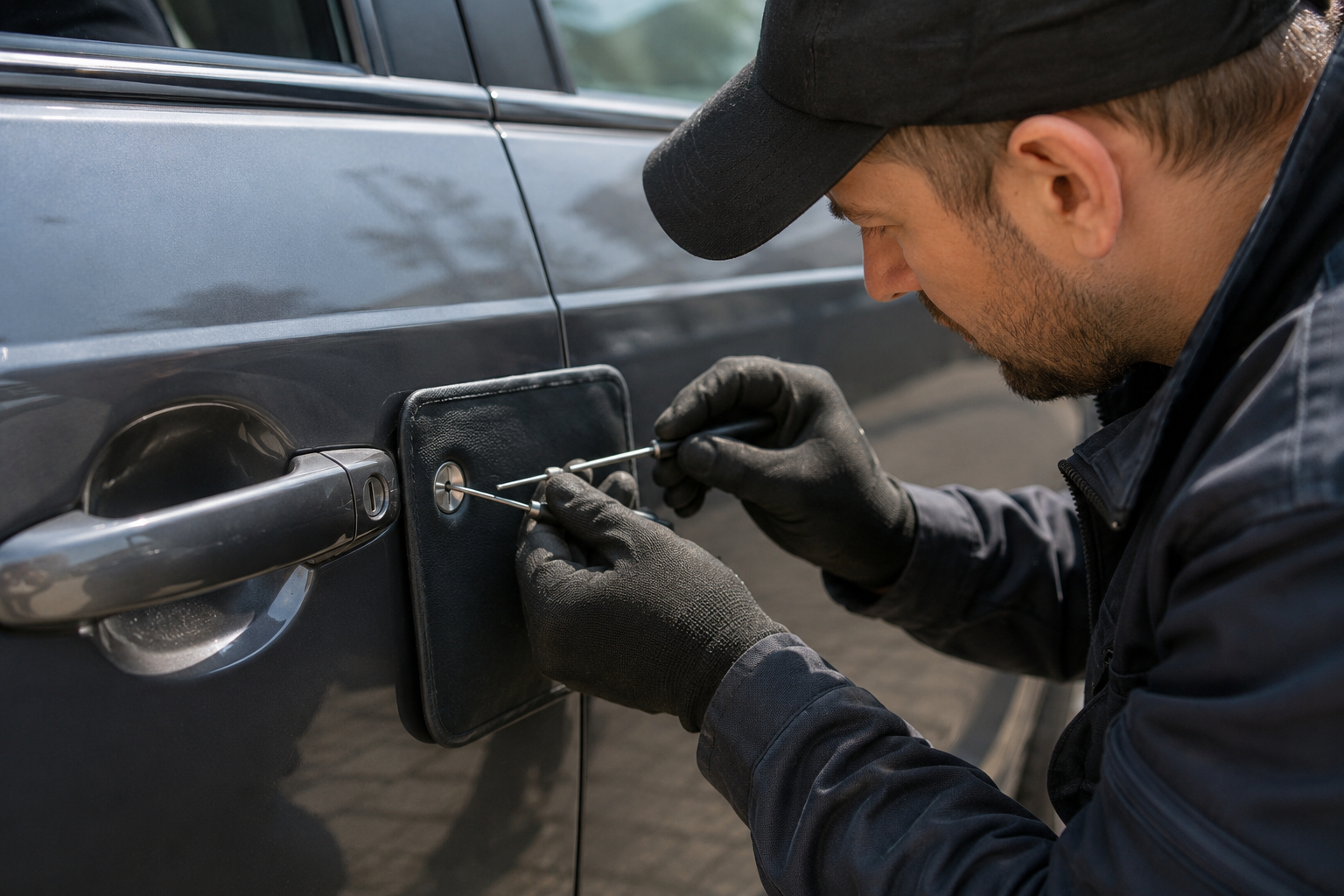
Professional broken key removal starts with an inspection. The exact approach depends on the lock type, fragment depth, key position, and internal damage. The locksmith should explain the likely process before beginning.
Confirming Vehicle Ownership
A responsible auto locksmith will ask for proof that you own or have permission to use the vehicle. This may include photographic identification, vehicle documents, insurance details, or other evidence connecting you with the car. These checks protect vehicle owners and support safe locksmith work.
Inspecting the Keyway
The locksmith checks how far the key fragment has travelled. They’ll also look at whether the lock has turned, whether the fragment is bent, and whether another object has already been inserted. This inspection helps reduce unnecessary damage.
Protecting the Vehicle
The area around the lock should be protected before work begins. This helps avoid scratches to the door, trim, dashboard, or ignition surround. The locksmith can then work with better control.
Using Specialist Extraction Tools
A trained locksmith uses tools made for snapped key extraction. The aim is to release and extract the broken key fragment without harming the surrounding components. The method changes depending on the key and lock design. This isn’t the same as inserting a homemade hook or blade.
Testing the Lock
Removing the key fragment doesn’t automatically mean the problem is solved. The locksmith should test the cylinder, ignition, steering lock, and replacement key where relevant. This helps identify the reason the original key broke. A stiff or damaged lock may need repair before it’s safe to use again.
Cutting or Programming a Replacement
Traditional vehicle keys may need a new blade cut. Modern keys can also contain a transponder chip, remote board, or smart-key electronics. A replacement may need programming so it communicates with the vehicle correctly. Car Keys 24 provides mobile key repair, replacement, cutting, programming, vehicle unlocking, and ignition-related services.
Key Broken in a Car Door Lock
A key fragment stuck in a car door lock may prevent you from entering or securing the vehicle. The problem may involve the blade alone, but the cylinder may also be worn or damaged. Dirt, corrosion, previous force, and internal wear can affect how the lock works.
Don’t try to push the broken key inside the keyway. Also avoid testing the lock with another key. A locksmith can inspect the cylinder and confirm whether it still works safely.
Will the Door Lock Need Replacing?
Not every broken key means the lock must be replaced. The cylinder may remain usable when the fragment is removed cleanly and no internal damage is found. Repair or replacement may be advised when the cylinder is stiff, worn, damaged, or already faulty. The locksmith should explain the available options before completing extra work.
Key Broken Inside the Ignition
A broken ignition key can be more complex than a broken car door key. The key may be trapped while the ignition is partly turned. Steering pressure or an internal ignition fault may also be involved. Don’t insert pliers, screwdrivers, spare keys, or metal tools into the ignition. Damage here may stop the vehicle from starting and increase the repair needed.
Signs of an Ignition Problem
Your ignition may need inspection when:
- The key was difficult to turn before breaking.
- The key often became stuck.
- The ignition felt loose or uneven.
- The key only worked at a certain angle.
- The steering lock didn’t release normally.
- Several keys had the same problem.
These signs may point to wear inside the ignition rather than a simple key fault.
Can the Car Be Driven Afterwards?
The vehicle should only be used after the key and ignition have been checked. A newly cut key may also fail when the cylinder remains damaged. Testing the system first reduces the chance of another key becoming trapped.
Can a Broken Car Key Be Repaired?
That depends on which part has broken. A damaged outer case, button, battery, or detachable blade may sometimes be repaired. A badly worn or snapped blade will usually need replacing.
The locksmith should also inspect the electronic parts.
What Happens to the Transponder Chip?
Many modern car keys contain a security chip. The chip communicates with the vehicle’s immobiliser system. If the blade breaks but the chip remains safe, part of the original key may sometimes be reused. When the chip is missing, damaged, or unsuitable, a replacement key may need programming.
Repair or Complete Replacement?
Repair may be suitable when the electronics work and only one replaceable part has failed. A complete replacement may be safer when:
- The blade is badly worn.
- The key casing is heavily damaged.
- The circuit board has failed.
- The transponder chip is damaged.
- The key has repeated faults.
- The original key can’t be trusted.
A professional assessment helps avoid paying for parts you don’t need.
How Much Does Broken Key Removal Cost?
There isn’t one fixed price for every broken key. The final cost can depend on:
- The vehicle’s make, model, and year.
- Whether the key is in the door or ignition.
- How deeply the fragment is stuck.
- Whether DIY attempts caused added damage.
- The type of lock or ignition system.
- Whether the cylinder needs repair.
- Whether another key must be cut.
- Whether transponder programming is required.
- Your location and the time of attendance.
Share clear details when requesting a quote. Include the vehicle registration, location, key type, and where the key has broken. Photographs may also help the locksmith understand the problem, but they don’t replace an on-site inspection.
How Long Does Broken Key Removal Take?
The time needed depends on the fault. A clear, accessible fragment may be simpler than a piece trapped deeply inside a damaged ignition. Modern key programming can also add time after extraction. Be careful with anyone promising an exact arrival or completion time without asking about the vehicle. Traffic, location, lock condition, parts, and key type can all affect the job.
How Can You Prevent Another Broken Key?
You can reduce the risk by acting when the first warning signs appear.
Replace a Worn Key Early
Check the blade for cracks, bends, worn edges, or movement near the key casing. A worn key is more likely to fail under pressure. Replacing it early is usually easier than arranging emergency extraction.
Don’t Force a Stiff Lock
A lock that needs extra force has a problem. Stop using it and arrange an inspection. Continuing to turn the key may damage both the blade and cylinder.
Get a Spare Car Key
A spare key gives you another option when the main key becomes damaged. It can also reduce stress when a key is lost. Arrange the spare while you still have a working original, rather than waiting for an emergency.
Protect Folding Keys
Folding keys can wear around their hinge and blade connection. Avoid forcing the blade open or closed. Have loose movement checked before the blade separates from the casing.
When Should You Call an Emergency Auto Locksmith?
Contact an emergency broken key locksmith when:
- The key is trapped inside a car door.
- The key has snapped inside the ignition.
- The vehicle can’t be locked securely.
- You’re stranded away from home.
- The fragment has been pushed deeper.
- Another tool has become stuck inside.
- The ignition won’t return to its normal position.
- You don’t have a working spare.
- You need another key cut or programmed.
Car Keys 24 operates as a mobile service across Dunstable and surrounding areas, including Luton, Bedford, Milton Keynes, Northampton, Watford, Hemel Hempstead, and St Albans. Service availability and arrival times can depend on your location and the type of problem.
Call 07731 505 060 and explain where the key has broken, your vehicle details, and your current location.
Frequently Asked Questions
What should I do when a key breaks in a lock?
Stop turning the lock and don’t insert other tools. Keep the broken piece, secure the vehicle, and contact an auto locksmith.
Can a locksmith remove a broken key from a car lock?
A trained auto locksmith can normally remove a broken fragment using specialist equipment. The result depends on the fragment position and existing lock damage.
Can I remove a broken key with pliers?
Pliers can crush, twist, or push the fragment deeper. They can also damage the lock face, so professional extraction is safer.
Should I spray WD-40 into the lock?
Don’t flood the lock without checking what product is suitable. Excess spray may complicate extraction or move dirt farther inside.
Can a broken key damage the ignition?
Yes, especially when the fragment is twisted, pushed deeper, or surrounded by damaged ignition parts. The ignition should be inspected after extraction.
Can a locksmith make a key from the broken pieces?
It may be possible to identify and cut a replacement using the broken blade, vehicle information, or approved key data. Modern keys may also need programming.
Will the whole lock need replacing?
Not always. A working cylinder may only need the fragment removed. Replacement may be recommended when the lock is worn, damaged, or unsafe.
Do I need proof of vehicle ownership?
A responsible auto locksmith should confirm your identity and authority to access the vehicle before carrying out security-related work.
Can the original transponder chip be reused?
It may be reusable when it hasn’t been lost or damaged. The locksmith must inspect the key and confirm whether reuse is suitable.
How can I avoid another key snapping?
Replace worn or bent keys, don’t force stiff locks, and keep a working spare key available.


