
A damaged or unreliable car key can quickly disrupt your day. You may struggle to unlock the doors, start the engine, or use the remote buttons.
However, not every broken car key needs replacing.
A repair may be suitable when the casing, buttons, or blade are damaged. A replacement is normally needed when the key is lost, badly broken, or has an electronic fault that cannot be repaired safely.
The correct choice depends on which part has failed. A professional inspection can help you avoid paying for work you don’t need.
Car Key Repair or Replacement: The Direct Answer
Choose car key repair when the original key remains available and its main electronic parts still work. Cracked cases, worn buttons, loose battery contacts, and some blade faults may be repairable.
Choose car key replacement when the key is lost, stolen, badly snapped, or electronically dead. Replacement may also be safer when the key has failed several times after earlier repairs.
The main difference is simple:
- Repair keeps the usable parts of your current key.
- Replacement creates and programs another working key.
- Repair usually suits small or isolated faults.
- Replacement suits major damage, loss, or security concerns.
These repair and replacement conditions match the fault guidance supplied for this article.
You can arrange professional car key repairs when the existing key may still be saved. When the key cannot be restored safely, a complete car key replacement may be needed.
Quick Repair or Replacement Comparison
| Car key problem | Repair may work | Replacement may be needed |
|---|---|---|
| Cracked or damaged outer shell | Yes | Only if internal parts are damaged |
| Worn rubber buttons | Yes | If the circuit board has failed |
| Loose or missing button | Yes | If board contacts are badly damaged |
| Flat key-fob battery | Usually | Rarely |
| Slightly worn key blade | Sometimes | If badly bent or weakened |
| Snapped key blade | Sometimes | Often, depending on the break |
| Water-damaged key fob | Sometimes | If corrosion has damaged the board |
| Failed transponder chip | Rarely | Usually |
| Lost or stolen key | No | Yes |
| Repeated key failure | Sometimes | Often safer |
| Key no longer recognised by the car | Testing needed | Programming or replacement may be needed |
This table offers initial guidance only. The key should still be tested before any final decision.
When Should You Choose Car Key Repair?
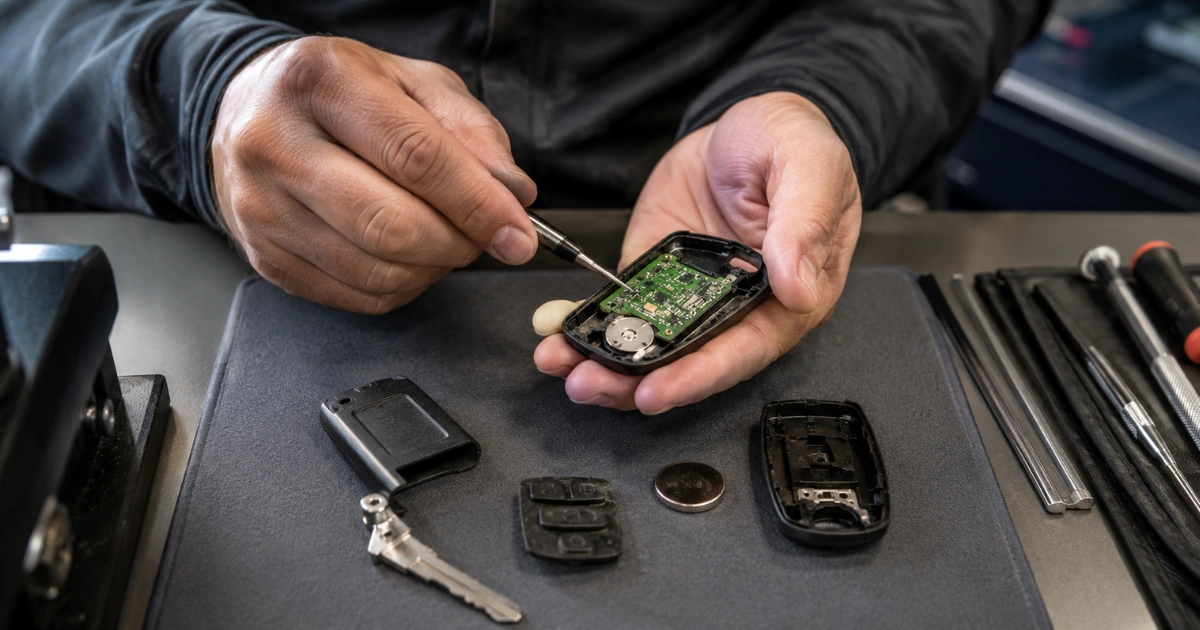
Repair is often the sensible option when the key remains mostly complete. The original electronics must also be working or safely recoverable.
The Key-Fob Casing Is Cracked
Car key shells can crack after being dropped or crushed. The blade hinge may also become loose over time.
A damaged shell does not always mean the electronics are broken. A technician may transfer the circuit board, transponder, and blade into a suitable new casing.
This repair must be completed carefully. The small transponder chip can be lost or damaged during an incorrect casing change.
The Remote Buttons Are Worn
Frequent use can wear away rubber button covers. The buttons may feel soft, stick down, or stop responding properly.
A technician will check the button pad and the small switches underneath it. If the circuit board remains healthy, car key button repair may restore normal operation.
Replacement may be needed when the board itself has cracked or corroded.
The Battery Contacts Are Loose
A fresh battery won’t help when the internal contacts are damaged. The key may work when pressed tightly but fail again later.
Loose contacts may sometimes be cleaned, adjusted, or repaired. The circuit board should first be checked for cracks and corrosion.
The Blade Is Worn or Slightly Damaged
A worn car key blade may feel stiff inside the lock. You may need to move it before the ignition turns.
The technician will inspect the blade for wear, bends, and weakness. A suitable new blade may then be cut using the correct vehicle information.
A badly bent blade should not be forced inside the ignition. It could snap and leave part of the key trapped inside.
The Key Works Only Sometimes
An intermittent fault often appears before complete failure. The remote may work from certain angles or only after several presses.
Possible causes include:
- Worn buttons
- Loose battery contacts
- Internal board damage
- Moisture or corrosion
- A weak battery
- Programming problems
Testing the key early may protect the reusable parts. It may also prevent an unexpected lockout later.
When Is Car Key Replacement the Safer Choice?
Some faults cannot be repaired reliably. Continuing to use a badly damaged key can also create further problems.
The Key Is Lost or Stolen
A missing key cannot be repaired. A new key must be cut and programmed for the vehicle.
When a key has been stolen, ask whether the missing key can be removed from the vehicle’s stored key list. This can reduce the chance of the old key starting the car later.
The available security options depend on the vehicle’s make, model, and system.
The Transponder Chip Has Failed
Most modern keys contain a transponder chip. It communicates with the vehicle’s immobiliser when you try starting the engine.
The remote buttons may still unlock the doors when the transponder fails. However, the engine may not start because the vehicle cannot approve the key.
A failed or missing transponder normally requires a suitable replacement key and programming.
The Circuit Board Is Badly Damaged
The circuit board controls the remote functions inside many modern keys. Water, impact, corrosion, or poor repairs can damage it.
Limited damage may sometimes be repairable. However, replacement is often safer when the board has burnt sections, deep corrosion, or broken electronic tracks.
A technician should inspect water-damaged car key fob repair options before deciding. Avoid repeatedly pressing a wet key, since this may worsen an electrical fault.
The Blade Has Snapped Badly
A clean blade break may sometimes allow a new blade fitting. Severe damage around the hinge or key head can make replacement more suitable.
When a blade snaps inside the door or ignition, professional extraction is also needed. Trying to pull it out with sharp tools can damage the lock cylinder.
The Key Keeps Failing After Repairs
One repair may solve a clear, isolated fault. Several repairs for recurring failures can become less practical.
Replacement may offer a more dependable result when:
- The casing has broken several times
- The board has repeated connection faults
- The blade keeps coming loose
- Corrosion continues spreading
- The key regularly loses communication
The technician should explain which parts have failed before recommending replacement.
Which Parts of a Car Key Can Be Repaired?
A modern car key contains several separate parts. One failed part does not always make the whole key useless.
Outer Casing
The casing protects the electronics and transponder. Cracks, broken clips, and damaged hinges may be repairable with a correct replacement shell.
Remote Buttons
Button pads and small internal switches may be replaceable. The board must remain in a repairable condition.
Key Blade
A worn or damaged blade may sometimes be replaced. The correct blade type and cutting information are required.
Circuit Board
Minor contact, switch, or connection faults may be repairable. Heavy corrosion and major physical damage often make replacement safer.
Transponder Chip
The transponder is linked to the vehicle’s immobiliser system. A missing or dead chip usually requires replacement and programming.
Battery and Contacts
A flat battery is a simple fault. Damaged contacts or board connections may require professional repair.
How a Technician Decides Between Repair and Replacement
A proper decision should follow an inspection rather than guesswork.
1. Checking the Casing
The technician checks for cracks, broken clips, loose hinges, and missing buttons. They also confirm whether the internal parts remain secure.
2. Inspecting the Blade
The blade is checked for wear, bends, cracks, and movement. The ignition or door lock may also need checking when the blade feels stiff.
3. Testing the Remote Functions
The remote signal, battery, contacts, and buttons are tested. This helps separate a battery issue from a deeper electronic fault.
4. Checking the Circuit Board
The board is inspected for moisture, corrosion, cracked solder joints, and impact damage. Repair is only sensible when the board can be restored reliably.
5. Testing the Transponder
The technician checks whether the vehicle can recognise the transponder. A failed transponder may require another chip or complete replacement key.
6. Checking Programming
Sometimes the physical key is undamaged, but the vehicle no longer accepts it. Programming tests help confirm whether the problem involves the key or vehicle system.
Car Keys 24 currently lists repairs for buttons, blades, and casings. It also provides replacement, cutting, and programming services for different key faults.
What Affects Car Key Repair Costs?
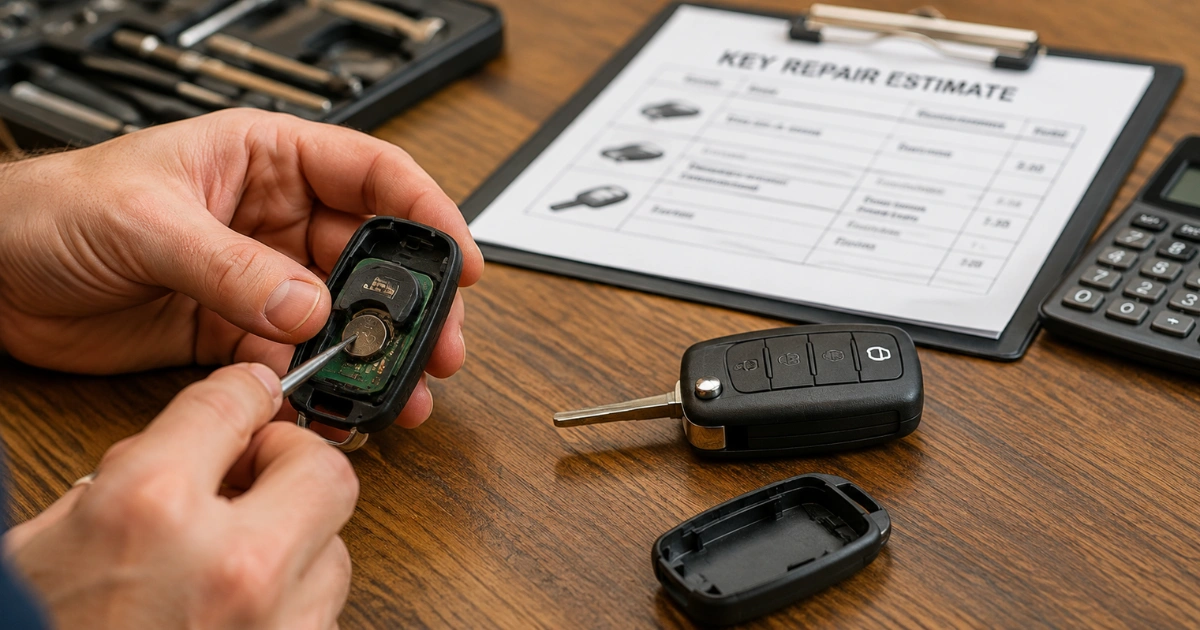
There is no single car key repair cost for every vehicle. The final price depends on the key type and damage involved.
Important cost factors include:
- Vehicle make, model, and year
- Standard, remote, transponder, or smart key
- Which key parts are damaged
- Whether programming is required
- Whether a working spare key exists
- Blade cutting requirements
- Availability of compatible parts
- Your location and service requirements
Ask for a clear assessment before approving the work. The quote should explain whether the service covers repair, cutting, programming, or complete replacement.
Repairing a Faulty Car Key Versus Buying a New Key
Repair can reduce waste and keep the original working electronics. It makes sense when the problem is small and clearly identified.
Replacement provides a complete working key when important parts have failed. It may also be safer after loss, theft, or repeated electronic problems.
The cheapest option is not always the correct one. A weak repair that fails again can cost more over time.
The better choice should provide:
- Reliable locking and unlocking
- Safe ignition operation
- Correct immobiliser communication
- Secure internal components
- A strong casing and blade
- Compatible programming
When choosing a complete key, ask about the differences between OEM and aftermarket car keys. Compatibility, build quality, functions, availability, and price can vary.
Mistakes That Can Make Key Damage Worse
Small key faults can become larger after unsuitable repairs.
Avoid these common mistakes:
- Forcing a stiff blade inside the ignition
- Gluing a cracked casing around moving parts
- Copying a badly worn blade without proper checks
- Moving electronics without locating the transponder
- Buying an unverified key online
- Pressing buttons repeatedly after water exposure
- Using heat to dry electronic key parts
- Ignoring an intermittent fault until the key fails
A key must match the vehicle’s blade, frequency, transponder, and programming requirements. A similar-looking key may not be compatible.
What Information Does an Auto Locksmith Need?
Providing clear information helps the technician prepare suitable equipment and parts.
Have these details ready:
- Vehicle registration
- Make and model
- Year of manufacture
- Your postcode or current location
- Key type, when known
- A clear description of the fault
- Whether you have another working key
- Whether the key is lost, stolen, or damaged
Photos of the damaged key may also help with the first assessment. However, physical and electronic testing may still be required.
Should You Repair or Replace Your Car Key?
Repair your car key when the fault affects a replaceable outer part. This often includes the casing, buttons, contacts, or blade.
Replace the key when it is missing, badly damaged, or electronically unreliable. Replacement is also sensible when earlier repairs have not solved the problem.
You don’t need to diagnose every component yourself. Describe what happened and explain how the key behaves.
Car Keys 24 provides mobile car key repair and replacement services across its listed service areas. A technician can inspect the key and explain which option matches the fault.
Request a Mobile Car Key Assessment
Not sure whether you need repair or replacement?
Contact Car Keys 24 with your vehicle registration, key problem, and postcode. The team can review your situation and arrange a mobile assessment where available.
Call Car Keys 24 on 07731 505 060.
Frequently Asked Questions
Can a broken car key be repaired?
Some broken car keys can be repaired. Cracked casings, damaged buttons, loose contacts, and certain blade faults may be fixable. Replacement is more likely when the transponder or circuit board has failed.
Is it better to repair or replace a cracked key fob?
Repair may be suitable when only the outer shell is cracked. Replacement may be needed when water, impact, or pressure has damaged the electronics inside.
Can a snapped car key blade be replaced?
A technician may fit and cut another blade when the electronics remain usable. Complete replacement may be safer when the key head, hinge, or transponder is also damaged.
Does a replacement car key need programming?
Many modern replacement keys need programming. This allows the key or transponder to communicate with the vehicle’s immobiliser and security system.
Is repairing a car key cheaper than replacing it?
Repair may cost less when only one minor part has failed. However, the price depends on the key type, vehicle, required parts, programming, and extent of damage.
What should I do if my car key works intermittently?
Arrange an inspection before the key stops working completely. Intermittent faults can come from worn buttons, loose contacts, moisture, battery problems, or internal electronic damage.


