
Losing or damaging your car key can leave you unsure about what to request. You may hear terms like cutting, coding, pairing, and programming.
These services sound similar, but they solve different problems.
Car key cutting shapes the physical blade so it fits your vehicle’s lock or ignition. Car key programming connects the key’s electronic chip to the vehicle’s security system. Many modern replacement keys need both services, while some older mechanical keys may only need cutting.
Understanding the difference helps you request the correct service. It can also prevent delays when you need a working key quickly.
The Difference Between Key Cutting and Programming
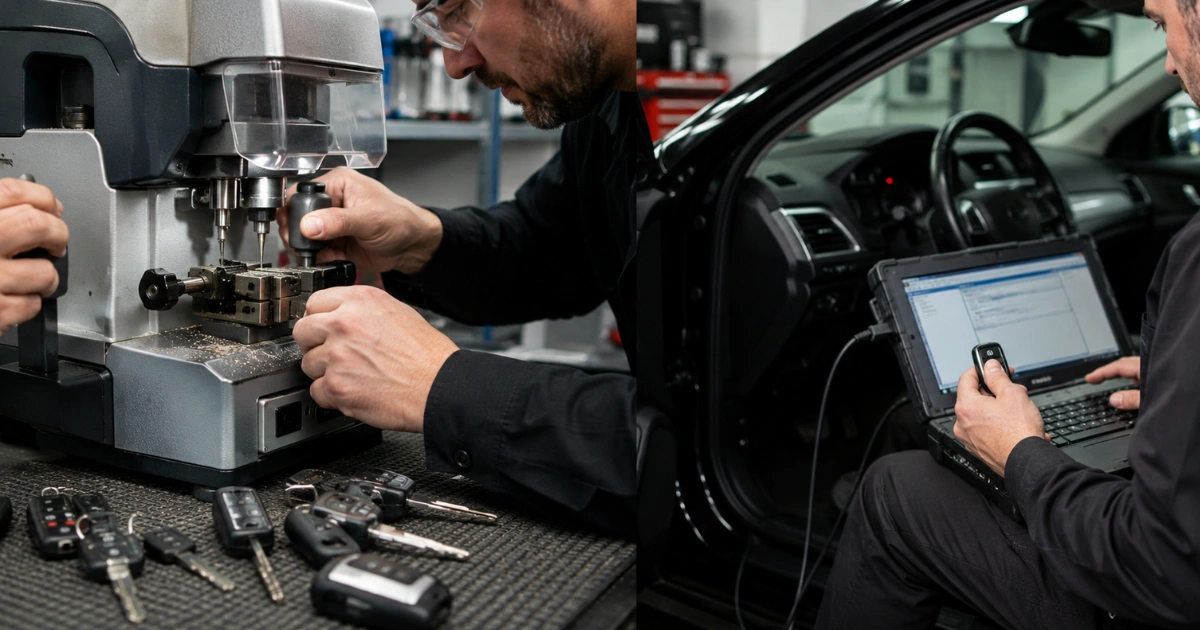
Car key cutting is a mechanical process. It creates the correct grooves and shape on the metal blade.
Car key programming is an electronic process. It registers the transponder chip or smart key with the vehicle.
A cut key may open the door and turn the ignition. However, the engine may still refuse to start if the electronic chip isn’t recognised.
In simple terms:
- Cutting gives the key its physical shape.
- Programming gives the key electronic permission.
- Remote pairing controls locking and unlocking buttons.
- Smart-key programming supports keyless entry and starting.
Remote pairing and transponder programming can be separate tasks. A remote may unlock the doors while its transponder still fails to start the engine.
Car Key Cutting and Programming Compared
| Feature | Car key cutting | Car key programming |
|---|---|---|
| Type of work | Mechanical | Electronic |
| Main part involved | Metal blade | Transponder chip or smart-key electronics |
| Main purpose | Turn locks and ignition | Pass the immobiliser security check |
| Equipment used | Precision key-cutting machine | Diagnostic and key-programming equipment |
| Vehicle usually needed | Not always | Usually required |
| Commonly needed for older keys | Yes | Not always |
| Commonly needed for modern keys | Yes, when a blade is included | Usually |
| Controls remote buttons | No | Sometimes through separate remote pairing |
| Allows the engine to start | Mechanically only | Yes, when correctly authorised |
When your original key is missing or unusable, a complete car key replacement may include cutting, programming, remote pairing, and final testing.
What Is Car Key Cutting?
Car key cutting creates the physical blade used inside a lock or ignition. The blade must match the vehicle’s lock pattern accurately.
A key cutting service may use an existing working key, a vehicle key code, or information taken from the lock. The suitable method depends on the vehicle and the situation.
How a New Car Key Blade Is Cut
The locksmith first identifies the correct blank blade. The blank must match the vehicle’s blade type and dimensions.
The blade may then be cut using:
- An existing working key
- A manufacturer key code
- Lock information
- Specialist decoding equipment
The cutting machine shapes the blank to match the required pattern. The finished blade is checked before it is used inside the vehicle.
Copying a heavily worn blade without checking it can copy the wear too. A code-based cut may provide a cleaner result when the correct information is available.
What Does a Cut Blade Do?
A correctly cut blade can operate the vehicle’s mechanical parts. Depending on the design, it may:
- Unlock the driver’s door
- Turn the ignition switch
- Open the boot
- Fit an emergency lock
- Release a hidden mechanical cover
However, the blade does not handle electronic security by itself.
A perfectly cut key can turn inside the ignition but still fail to start the engine. This usually happens when its transponder hasn’t been accepted by the immobiliser.
When Is Key Cutting Alone Enough?
Cutting alone may be enough for an older vehicle with a basic mechanical key. These keys do not contain a transponder chip or remote electronics.
Cutting may also be enough when you only need an emergency blade for a modern smart key. That blade may open the door if the remote battery fails.
Vehicle age alone doesn’t confirm the correct service. Some older vehicles have electronic security, while certain specialist or classic vehicles use mechanical systems.
What Is Car Key Programming?
Car key programming allows the vehicle to recognise a key electronically. This process usually involves the transponder, immobiliser, or smart-key system.
The vehicle checks the key when you attempt to start the engine. If it recognises the correct electronic information, the immobiliser allows the engine to start.
If the check fails, the engine may remain disabled. This can happen even when the blade fits and turns correctly.
Electronic immobilisers became widely used during the 1990s. They were required on new cars sold across the European Union from 1998, although individual vehicle systems and introduction dates vary.
What Is Transponder Key Programming?
A transponder is a small electronic chip inside the key. It communicates with the vehicle’s immobiliser system.
During transponder key programming, compatible chip information is registered or prepared for the vehicle. The exact method depends on the manufacturer and security system.
The process may involve:
- Selecting a compatible transponder
- Connecting diagnostic equipment
- Accessing the immobiliser system
- Entering security information
- Registering the new key
- Testing the engine start function
Some systems allow another key to be added. Others require every working key to be present during the programming session.
A missing key may sometimes be removed from the vehicle’s stored key list. This may be important when the original key was lost or stolen.
Is Remote-Fob Pairing the Same Process?
Not always.
The remote buttons usually control door locking, unlocking, and boot release. The transponder controls permission to start the engine.
These functions may use different electronic systems. Therefore, a remote may require separate pairing after the transponder has been programmed.
This explains several confusing situations:
- The buttons work, but the engine won’t start.
- The engine starts, but the buttons don’t work.
- The emergency blade opens the door, but the remote fails.
- One function works while another remains unpaired.
Professional programming guidance also treats remote synchronisation as a separate stage from transponder enrolment.
What Is Smart-Key Programming?
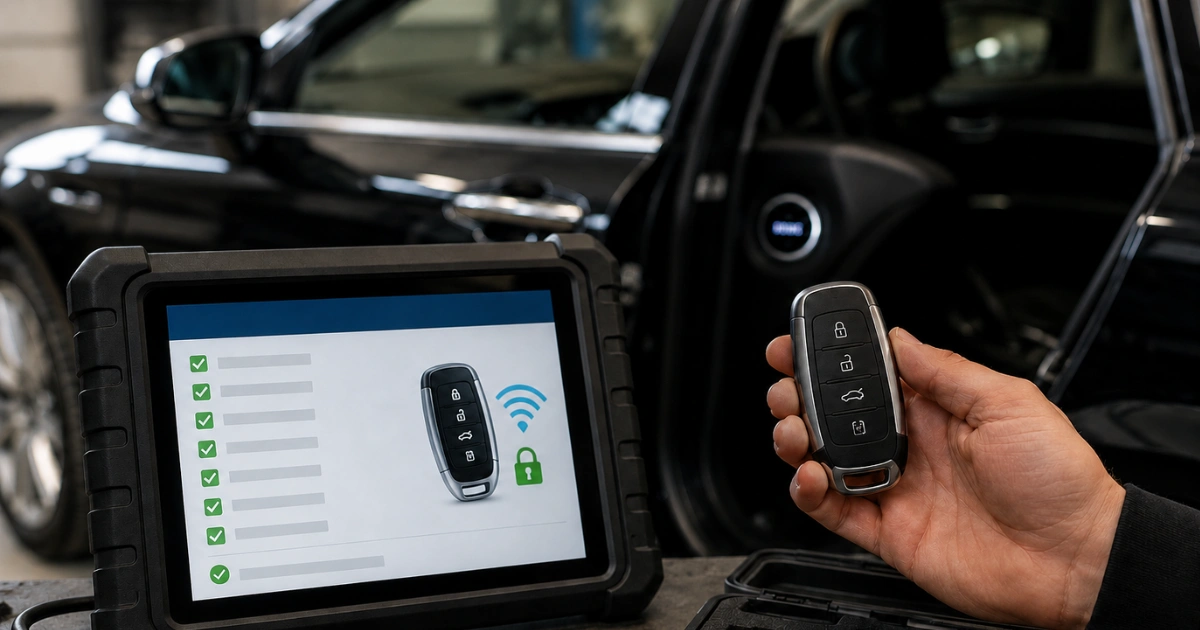
A smart key supports features such as passive entry and push-button starting. The driver may not need to place a blade inside the ignition.
The vehicle detects the authorised key when it is nearby. Its security system then decides whether to unlock the doors or allow the engine to start.
Smart-key programming may involve:
- Registering the key with the immobiliser
- Pairing wireless remote functions
- Checking proximity detection
- Testing keyless entry
- Testing the push-button start
- Confirming the emergency blade works
These systems can be more complex than standard transponder keys. Some newer vehicles may require manufacturer-level software, online authorisation, or specialist access.
A locksmith should confirm support using the vehicle’s make, model, year, and key type before attending.
Which Services Does Your Car Key Usually Need?
The table below provides general guidance. The exact requirements can vary between models from the same year.
| Vehicle or key type | Cutting usually needed | Transponder programming | Remote pairing | Smart-key programming |
|---|---|---|---|---|
| Older mechanical key | Yes | No | No | No |
| Basic transponder key | Yes | Yes | No | No |
| Remote key with blade | Yes | Yes | Usually | No |
| Flip key | Yes | Yes | Usually | No |
| Key card | Sometimes | Yes | Usually | Sometimes |
| Proximity smart key | Emergency blade only | Yes | Usually | Yes |
| Push-button start fob | Emergency blade only | Yes | Usually | Yes |
| Replacement shell using original electronics | Sometimes | Usually not | Usually not | Usually not |
This matrix should not replace a vehicle-specific check. Key technology can vary by trim level, production date, market, and security system.
How a Replacement Car Key Is Prepared
A complete replacement normally follows four clear stages. Separating these stages makes it easier to see what you are paying for.
1. Identify the Key
The technician first confirms the vehicle and required key type.
This may include checking:
- Vehicle registration
- Make and model
- Year of manufacture
- Blade profile
- Transponder type
- Remote frequency
- Smart-key system
- Whether another working key exists
The correct blank must match the vehicle. A key that looks similar may use a different chip, frequency, or blade.
You may also need proof of identity and vehicle ownership. Our guide to documents needed for car key replacement explains what to prepare.
2. Cut the Blade
The technician cuts the metal blade to match the lock or vehicle code. The blade is then checked for smooth operation.
It should move correctly without being forced. A poor cut can become stiff or damage the lock over time.
Smart keys may still contain an emergency blade. This blade should also be prepared and tested.
3. Programme the Electronics
The transponder is registered with the vehicle’s security system. Remote or smart functions may then be paired separately.
Professional tools may connect through the vehicle’s diagnostic port. However, the exact process varies between manufacturers.
Some systems require:
- A security PIN
- Existing working keys
- Online manufacturer access
- A waiting period
- Access to a security module
- Specialist diagnostic equipment
Most programming work also requires the vehicle to be present. This allows the new key and every important function to be tested properly.
4. Test the Completed Key
The job should not finish after the engine starts once.
The technician should test every available function, including:
- Door locking
- Door unlocking
- Engine starting
- Engine stopping
- Boot release
- Remote buttons
- Proximity detection
- Emergency blade operation
- Existing keys
The final check helps identify incomplete pairing or unreliable communication before the technician leaves.
Does a Cut Car Key Need Programming?
It depends on the key and vehicle.
A basic mechanical key may only need cutting. A modern transponder, remote, flip, or smart key will usually need electronic work too.
Your cut key may require programming when:
- The vehicle has an immobiliser
- The key contains a transponder
- The engine does not recognise the key
- The dashboard shows a key warning
- The vehicle uses push-button starting
- You are adding a new electronic key
- The original programmed electronics are unavailable
A newly cut blade does not automatically copy the electronic permission from the original key.
Why Can a Cut Key Turn but Not Start the Car?
This often means the mechanical blade is correct, but the electronic check has failed.
When you turn the key, the vehicle looks for an authorised transponder. If the correct response is missing, the immobiliser may prevent the engine from starting.
Possible causes include:
- The chip hasn’t been programmed
- The wrong transponder was supplied
- The transponder is missing
- The chip was damaged during a casing change
- The vehicle lost communication with the key
- The immobiliser has another fault
The engine may start briefly and stop again. A key or security warning may also appear on the dashboard.
Avoid repeatedly forcing or turning the key. A technician needs to test the blade, transponder, and vehicle system separately.
Can a Used Car Key Fob Be Programmed?
Sometimes, but not every used fob can be reused.
Some transponders become locked to the first vehicle. Other keys may be reset, renewed, or prepared with specialist equipment.
Compatibility also depends on:
- Part number
- Frequency
- Transponder type
- Vehicle model
- Production year
- Security system
- Whether the circuit board is reusable
A matching outer case does not confirm electronic compatibility. Read our guide to programming a used car key fob before buying a second-hand key online.
Can You Programme a Car Key Yourself?
Some older vehicles have limited onboard procedures for remote functions. However, these procedures may not programme the immobiliser transponder.
Most modern keys need diagnostic or specialist programming equipment. Incorrect attempts can leave the new key unusable or affect existing key registration.
Online instructions may also cover another model year or market. A small production change can alter the required process.
Professional assessment is safer when:
- You have no working keys
- The car uses a smart key
- The key contains a locked transponder
- Security access is required
- Existing keys must remain active
- The vehicle displays an immobiliser warning
The Master Locksmiths Association notes that car key programming often requires diagnostic equipment, vehicle security information, and model-specific procedures.
Does the Vehicle Need to Be Present?
The vehicle is usually needed for programming and final testing.
A technician may cut a blade from an existing key or code without the car. However, electronic enrolment normally requires access to the vehicle’s security system.
Having the vehicle present also allows the technician to test:
- The ignition
- Immobiliser recognition
- Door locks
- Remote buttons
- Smart-key detection
- Existing programmed keys
This is why mobile service can be useful when the vehicle cannot be driven.
What Affects Car Key Cutting and Programming Costs?
There is no single price for every vehicle. Costs depend on the work, key, and security system involved.
Common pricing factors include:
- Vehicle make and model
- Year of manufacture
- Key type
- Blade design
- Transponder type
- Remote or smart functions
- Whether all keys are lost
- Programming access needed
- Availability of compatible parts
- Your location
- Whether the job is urgent
A basic blade cut may cost less than a complete smart-key replacement. However, price should not be the only factor.
The key must be compatible, cut accurately, programmed correctly, and fully tested. Ask what the quote includes before approving the work.
Your quote should clearly state whether it covers:
- Key supply
- Blade cutting
- Transponder programming
- Remote pairing
- Smart-key programming
- Emergency blade cutting
- Testing
- Call-out charges
When choosing the key itself, compare OEM vs aftermarket replacement keys. The correct option depends on compatibility, functions, build quality, availability, and budget.
What Information Should You Provide?
Clear information helps the locksmith identify the correct equipment and key.
Prepare the following details:
- Vehicle registration
- Make and model
- Year
- Postcode or current location
- Type of key
- Whether the blade is present
- Whether another key works
- Whether the key is lost or damaged
- Which functions have stopped working
Describe each function separately. For example, explain whether the blade turns, the buttons work, or the engine starts.
This helps distinguish a cutting problem from a programming fault.
Getting a Spare Key Before an Emergency
A spare key is easier to prepare when you still have one working key. The existing key can help confirm the correct blade and electronic functions.
A spare can also reduce disruption if your main key is lost or damaged.
Car Keys 24 offers a mobile spare car key service that may include blade cutting and transponder preparation, depending on the vehicle.
Store the spare somewhere secure and accessible. Don’t leave it inside the vehicle.
Which Service Should You Request?
Request car key cutting when you need a physical blade shaped for the vehicle.
Request car key programming when the key needs electronic permission to start the engine or use smart functions.
You may need both services when:
- Replacing a lost key
- Creating a spare transponder key
- Replacing a damaged remote key
- Adding a flip key
- Preparing a smart key
- Replacing a key with no usable electronics
You don’t need to diagnose the whole system yourself. Explain what the key currently does and which functions have failed.
Frequently Asked Questions
What is the main difference between car key cutting and programming?
Cutting shapes the metal blade to work inside the lock or ignition. Programming registers the key’s electronic chip with the vehicle’s security system.
Does every car key need programming?
No. Basic mechanical keys may only need cutting. Most modern transponder, remote, and smart keys require some form of electronic programming.
Can a car start with a cut but unprogrammed key?
A mechanical vehicle may start. A vehicle with an immobiliser will normally reject an unprogrammed transponder, even when the blade turns correctly.
Is remote pairing the same as transponder programming?
Not always. Remote pairing controls buttons such as locking and unlocking. Transponder programming allows the immobiliser to recognise the key for starting.
Can an auto locksmith cut and programme a key at my location?
Many vehicles can be handled through a mobile service. Coverage depends on the make, model, year, key type, and programming system.
Can a key be programmed without the original?
Often, yes. The process may be more involved when every key is lost. The exact method depends on the vehicle’s security system.
Will adding a new key stop my current key from working?
Not usually when a spare key is added correctly. However, some procedures require every working key to be present and registered again.
How do I know which service I need?
Explain whether the blade turns, the remote works, and the engine starts. These details help the technician identify whether you need cutting, programming, or both.
Get a Quote for Key Cutting and Programming
Not sure which service your vehicle needs?
Contact Car Keys 24 with your vehicle registration, key problem, and postcode. The team can check the likely key type and confirm whether cutting, programming, or both services are required.
Call Car Keys 24 on 07731 505 060.


