
Losing or damaging your car key creates an immediate problem. You need a working replacement, but you may face several choices.
One supplier may suggest a genuine manufacturer key. Another may offer a cheaper compatible key made by a third party.
Both options can work well when correctly matched and programmed. However, their quality, features, availability, warranty, and price may differ.
The right choice depends on your vehicle and how you use the key.
OEM vs Aftermarket Car Keys: The Direct Answer
Choose an OEM car key when you want a genuine manufacturer part, full feature support, and the closest match to the original key.
Choose a reputable aftermarket key when it is confirmed as compatible and offers the functions you need at a suitable price.
Neither option is always better. The key must match your vehicle’s exact security system.
OEM and Aftermarket Car Keys Compared
| Comparison point | OEM car key | Aftermarket car key |
|---|---|---|
| Manufacturer | Made by or for the vehicle manufacturer | Made by an independent company |
| Compatibility | Designed for specific vehicle systems | Depends on the product and supplier |
| Build quality | Usually follows the manufacturer’s specification | Can vary between manufacturers |
| Remote functions | Normally supports original listed features | May support all or selected features |
| Smart-key functions | Often suitable when correctly matched | Support must be checked carefully |
| Availability | May require ordering | Common types may be readily stocked |
| Hardware cost | Often higher | Often lower |
| Warranty | Usually linked to the supplying dealer or manufacturer | Depends on the locksmith or supplier |
| Branding | Vehicle manufacturer branding | Usually plain or third-party branding |
| Programming | Still required for most modern keys | Still required for most modern keys |
| Best suited to | Drivers wanting an original-specification key | Drivers wanting a compatible alternative |
The table gives general guidance. Vehicle systems can differ by model, year, trim, and country of manufacture.
Car Keys 24 provides mobile car key replacement services for traditional, remote, transponder, and modern vehicle keys. Its service includes key cutting and programming where required.
What Is an OEM Car Key?
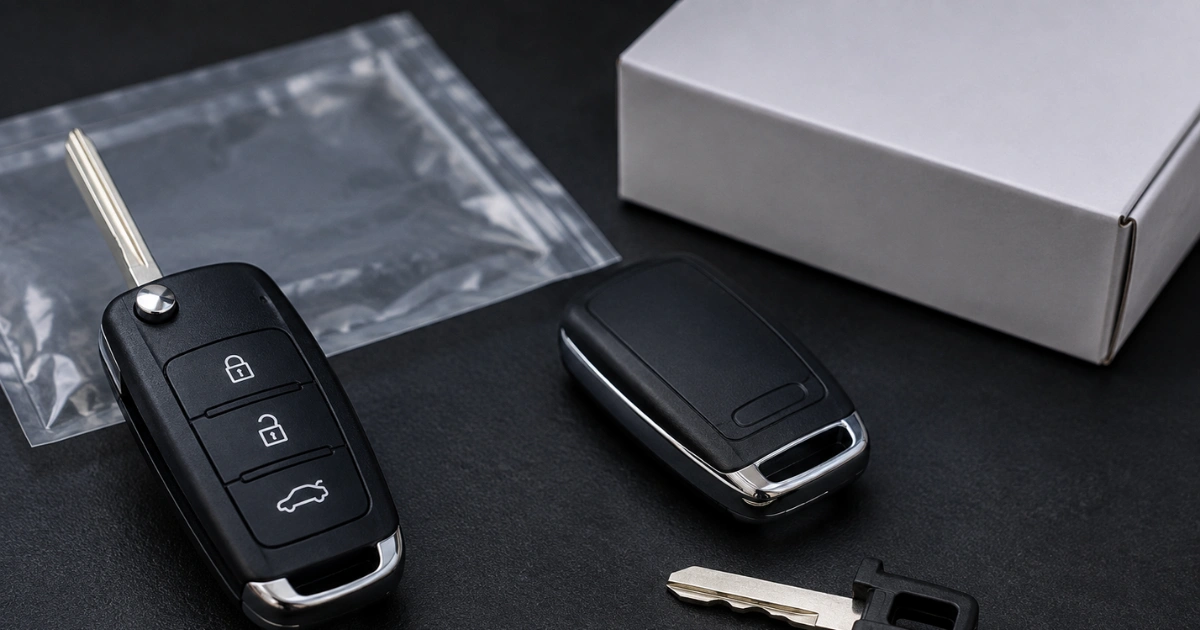
OEM means Original Equipment Manufacturer.
An OEM key is supplied through the vehicle manufacturer’s parts system. It may be made by the car manufacturer or an approved component supplier.
A genuine car key should match the original specification when the correct part is ordered. This may include:
- The correct transponder type
- The correct radio frequency
- The correct button layout
- The correct emergency blade
- Compatible proximity functions
- Manufacturer branding
- The expected casing design
Vehicle manufacturers often describe genuine parts as being designed for their own models. Volkswagen states that its genuine parts are tailored to Volkswagen vehicles. Toyota also supplies genuine parts through its approved dealer network.
However, the OEM label alone does not confirm compatibility.
The technician must still check the part number, frequency, transponder, vehicle year, and security system. The key must then be cut and programmed correctly.
What Is an Aftermarket Car Key?
An aftermarket key is made by an independent manufacturer. It is designed as a compatible alternative to the original key.
The UK government defines an aftermarket part as a product made for fitting after the vehicle has left the manufacturer’s production line.
Aftermarket car keys can include:
- Basic transponder keys
- Remote keys
- Flip keys
- Smart keys
- Proximity fobs
- Replacement shells
- Emergency blades
A well-made compatible car key can provide reliable everyday use. However, aftermarket key quality varies between brands and suppliers.
Some products closely match the original key. Others may use weaker casings, basic buttons, or limited electronic functions.
This is why price alone should not guide your decision.
Where Do Refurbished Car Keys Fit?
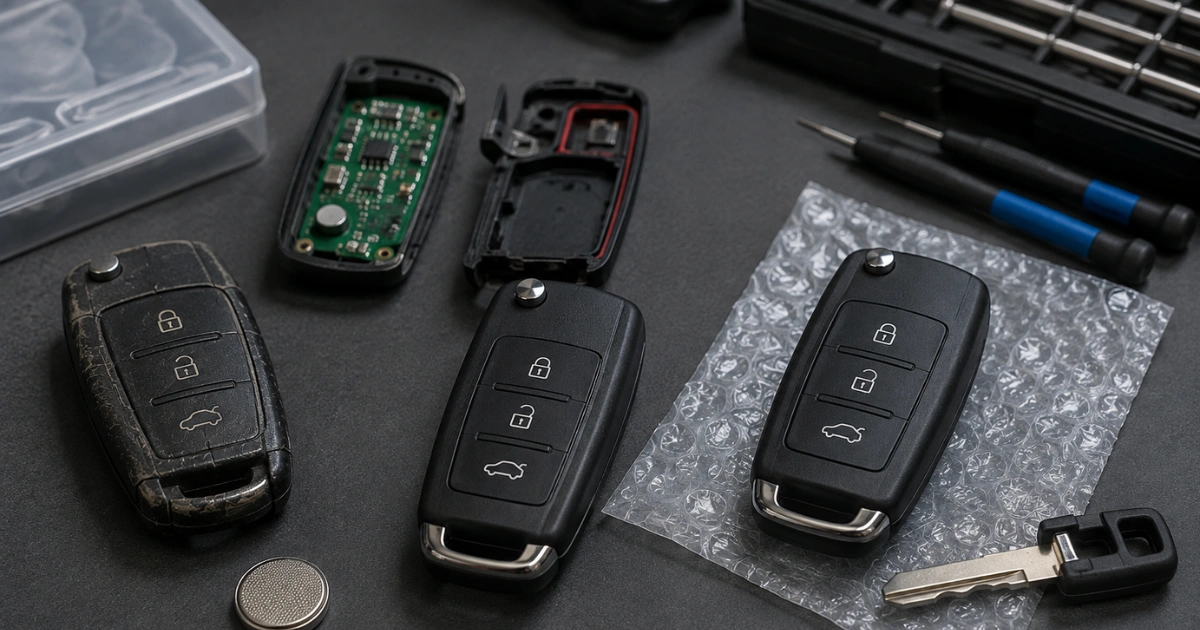
A refurbished key is different from a new aftermarket key.
It normally starts as a previously used OEM key. A specialist may replace its casing, buttons, battery, blade, or worn parts.
The electronics may also need checking, resetting, or preparing before reuse.
A refurbished OEM key can offer a middle option. It may provide genuine electronics at a lower price than a brand-new OEM key.
However, not every used key can be reset or transferred. Some transponders become locked to the first vehicle.
Before buying one, read our guide to used car key fob programming. A matching appearance does not confirm that the electronics can be reused.
Which Key Offers Better Compatibility?
OEM keys usually provide the clearest route to original vehicle compatibility. They are designed around specific manufacturer systems.
However, the correct OEM key must still match:
- Vehicle make
- Vehicle model
- Production year
- Trim level
- Part number
- Transponder type
- Operating frequency
- Button arrangement
- Keyless-entry system
- Regional specification
An incorrect OEM key may still fail to programme.
Aftermarket compatibility depends more heavily on the supplier. The product listing must match the vehicle’s full technical requirements.
A professional locksmith should check compatibility before ordering or programming either option.
Do Both Keys Support the Same Features?
Not always.
A basic replacement may unlock the doors and start the engine. It may not support every convenience feature found on the original key.
Features that need checking include:
- Remote locking
- Remote unlocking
- Boot release
- Keyless entry
- Push-button starting
- Proximity detection
- Remote window control
- Remote starting, where fitted
- Memory or comfort functions
- Emergency blade operation
An OEM key should support the functions listed for the correct vehicle specification.
A suitable aftermarket key may also support them. However, the supplier must confirm each feature rather than assuming compatibility.
For example, two keys may use the same casing and button layout. Their internal frequency or transponder may still differ.
Ask which functions are included before accepting a quote.
How Does Build Quality Compare?
OEM keys normally follow the vehicle manufacturer’s material and design requirements.
This can affect:
- Casing strength
- Button feel
- Blade hinge movement
- Battery contacts
- Internal board support
- Water and dust sealing
- Printed symbols
- Long-term wear
Aftermarket quality can range from strong to poor. Reputable manufacturers may produce durable keys that closely match the original.
Very cheap products may use thinner plastic or weaker button covers. Their blade hinges may also loosen sooner.
This does not mean every aftermarket key is weak. It means the manufacturer and supplier matter.
Ask whether the key has been tested for regular daily use. Also ask what happens if the casing, buttons, or electronics fail.
When your original electronics still work, replacing the whole key may be unnecessary. Our guide to repairing or replacing a car key can help you compare those options.
Car Keys 24 also offers car key repairs for damaged blades, casings, buttons, batteries, and some electronic faults.
What About Car Key Cutting and Programming?
Both OEM and aftermarket keys may need cutting and programming.
The brand of key does not remove these steps.
Key cutting shapes the metal blade to match the vehicle’s lock. Programming registers the transponder or smart-key electronics with the security system.
Remote pairing may be another separate step.
A complete service may include:
- Identifying the correct key
- Checking the blade profile
- Cutting the physical blade
- Programming the transponder
- Pairing the remote buttons
- Testing smart-key functions
- Testing all existing keys
Our guide to key cutting and programming differences explains these stages in more detail.
Even a genuine manufacturer replacement key will not work until it is prepared correctly. The correct hardware and correct programming are equally important.
Which Option Has the Better Warranty?
Warranty cover varies between suppliers.
A new OEM key may include a manufacturer or authorised dealer parts warranty. For example, Toyota states that its genuine parts include a minimum 12-month warranty. Other manufacturers may offer different terms.
Aftermarket keys may include a warranty from:
- The key manufacturer
- The parts supplier
- The auto locksmith
- The programming provider
Ask what the warranty covers before ordering.
Important questions include:
- How long does the warranty last?
- Does it cover the casing?
- Are worn buttons covered?
- Does it cover programming failure?
- Is accidental damage excluded?
- Are batteries included?
- Who handles a warranty claim?
- Will the key be repaired or replaced?
Do not assume that a higher price includes stronger cover. Read the actual terms.
Your normal UK consumer rights also apply when you buy goods and services. The product and work should meet the legal standards that apply to the sale.
Which Key Is Easier to Obtain?
Availability depends on the vehicle and key type.
OEM keys may need to be ordered through a dealer or approved supplier. This can be useful when the vehicle requires a restricted or model-specific key.
However, ordering may take longer when the part is not held locally.
Common aftermarket keys may already be stocked by a mobile locksmith. This can reduce delays during an urgent replacement.
Availability can become harder when:
- The vehicle is new
- The vehicle is uncommon
- The model uses an advanced smart key
- Manufacturer security access is required
- The original key is discontinued
- The part number has changed
- The vehicle was imported
Ask the technician to check stock before attendance. A fast appointment is not useful when the correct key is unavailable.
How Should You Compare the Total Programmed Cost?
Do not compare the key shell price alone.
The total replacement cost may include:
- Key hardware
- Emergency blade
- Key cutting
- Transponder programming
- Remote pairing
- Smart-key programming
- Security access
- Mobile call-out
- Diagnostic work
- Testing
- VAT, where charged
- Warranty cover
Aftermarket keys often cost less than new OEM keys. However, there is no reliable fixed saving for every vehicle.
A basic transponder key may show a large price difference. A specialist aftermarket smart key may still be expensive.
The cheapest online key can also become costly if it cannot be programmed. You may then pay for another key and a second appointment.
Ask for a complete programmed price rather than a hardware-only figure.
When Might an OEM Car Key Be Better?
An OEM key may be the better choice when:
- You want the closest match to the original
- The vehicle is new
- The car uses an advanced security system
- Every original function is important
- The vehicle is leased
- A warranty agreement has specific terms
- A suitable aftermarket version is unavailable
- The manufacturer restricts key access
- You plan to keep the vehicle for many years
- You want manufacturer branding
An OEM option may also provide reassurance for premium or uncommon vehicles. This is especially relevant when compatible third-party stock is limited.
However, confirm the full programmed cost first. An OEM key may not be necessary for every driver.
When Might an Aftermarket Car Key Be Suitable?
A reputable aftermarket key may be suitable when:
- Compatibility has been confirmed
- You need a lower-cost replacement
- The vehicle is older
- You need a practical spare
- The required key is readily available
- All important functions are supported
- The supplier provides clear warranty cover
- The key will be professionally programmed
A compatible aftermarket key can be a sensible choice for everyday use. It should still match the vehicle’s security and remote systems.
Do not choose one based only on appearance. The electronics inside matter much more than the outer casing.
Can a Cheap or Counterfeit Key Create Problems?
Aftermarket does not mean counterfeit.
A genuine aftermarket product is openly sold under its own manufacturer or supplier. A counterfeit product falsely claims to be an original manufacturer item.
Unknown online listings can make this difference difficult to spot.
Warning signs include:
- Fake manufacturer logos
- Missing part information
- No clear supplier identity
- No warranty details
- Unusually low prices
- Poor product photographs
- No frequency or chip details
- Claims that one key fits nearly every vehicle
UK government guidance warns that counterfeit vehicle parts may affect safety, insurance, or warranty arrangements. It recommends checking the supplier and researching parts before buying.
Buy through a verified supplier or professional locksmith. Do not send vehicle security information to an unknown seller.
Will an Aftermarket Key Affect the Vehicle Warranty?
A non-genuine key does not automatically answer every warranty question.
The outcome depends on:
- The vehicle’s warranty terms
- The type of key
- How the key was programmed
- Whether the replacement caused the claimed fault
- Whether the vehicle is leased or financed
- Any insurer requirements
A manufacturer may refuse to cover a fault that was caused by an unsuitable product or incorrect work. This does not mean every unrelated part of the vehicle loses cover.
Check with the vehicle manufacturer, warranty company, lease provider, or insurer when the car remains under an important agreement.
Get their answer in writing when possible.
Compatibility Checks Before Ordering a Key
Ask the supplier to confirm these details:
Vehicle Information
- Make and model
- Year of manufacture
- Registration number
- VIN, when required
- Trim or model version
- UK or imported vehicle
Physical Key Details
- Blade type
- Button layout
- Number of buttons
- Emergency blade
- Flip-key hinge
- Casing shape
Electronic Details
- Transponder type
- Remote frequency
- Smart-key system
- Proximity functions
- Push-button start
- Remote features
- Part number
Service Details
- Cutting included
- Programming included
- Existing keys remain active
- Mobile attendance included
- Warranty provided
- Final testing included
A professional should explain any feature that will not work. Avoid vague answers such as “it should be fine.”
Which Replacement Key Should You Choose?
Choose the key that matches your vehicle, required features, and budget.
An OEM car key can offer original branding and manufacturer specification. It may suit newer cars, advanced smart-key systems, and drivers who want the closest original match.
A good aftermarket key may offer better value and quicker availability. It can suit older vehicles, spare-key needs, and standard replacement jobs.
A refurbished OEM key may sometimes provide another option. However, its electronics must be checked and prepared correctly.
The best replacement key for your vehicle is not always the most expensive. It is the one that is compatible, professionally programmed, properly tested, and supported by a clear warranty.
Frequently Asked Questions
Are OEM car keys always better than aftermarket keys?
Not always. OEM keys offer original manufacturer specification, but a suitable aftermarket key can provide dependable service at a lower price. Compatibility and supplier quality matter most.
Are aftermarket car keys safe to use?
A reputable aftermarket key can be safe when it matches the vehicle and is programmed professionally. Avoid unverified or counterfeit keys with unclear specifications.
Will an aftermarket key have the same remote range?
It may, but range can differ between products. Battery quality, internal electronics, antenna design, and vehicle condition can all affect remote performance.
Can an aftermarket key support keyless entry?
Some aftermarket smart keys support keyless entry and push-button starting. The supplier must confirm compatibility with your exact vehicle system.
Can an auto locksmith programme an OEM key?
Often, yes. Support depends on the vehicle, key type, security access, and available programming equipment.
Does an OEM key still need programming?
Most modern OEM replacement keys need programming. A genuine key does not arrive automatically authorised for your vehicle.
Can a used OEM key be programmed to another car?
Sometimes. Some used keys can be reset or prepared, while others remain locked to their first vehicle. The exact answer depends on the key and security system.
Is an aftermarket key always cheaper?
Usually, but not always. Compare the full price for hardware, cutting, programming, attendance, testing, and warranty.
How can I tell whether a key is compatible?
Provide the vehicle’s make, model, year, registration, and key details. The supplier may also need the VIN or original part number.
Should I choose OEM for a spare key?
You do not always need an OEM spare. A tested aftermarket key may be suitable when it supports the functions you need.
Ask Which Replacement-Key Option Suits Your Vehicle
Not sure whether to choose an OEM or aftermarket car key?
Contact Car Keys 24 with your vehicle’s make, model, year, registration, and postcode. Explain which key functions you need and whether another key still works.
The team can check available options and provide a complete quote for the key, cutting, programming, and testing.
Call Car Keys 24 on 07731 505 060.


